Fast Flood Cleanup and Drying for Plano, TX Homes and Businesses
A flood in a slab-on-grade home behaves differently than most people expect. There is no basement to collect it in one place — water spreads sideways across the entire footprint, moving under baseboards and through hallways before anyone realizes how far it has traveled. By the time it shows up in one room, it is usually already present in the next.
Our crews are based in Collin County, so this is home ground — dispatch here is a short drive rather than a cross-metro run. We provide flood damage restoration for storm water, groundwater intrusion, and large indoor floods alike, and we screen the water itself before deciding what gets cleaned and what has to come out, because the source changes almost every decision that follows.
What to Do After Flooding Before Help Arrives
Safety comes before cleanup. Stay out of standing water near outlets, appliances, or anything electrical, and cut power at the breaker to affected areas if it is safe to reach. Do not run a household shop vac on more than a small amount of water, and stay off flooring that feels soft or spongy underfoot — it may not hold weight the way it looks like it should.
Photograph the damage before anything gets moved, and hold onto damaged items rather than discarding them until they have been assessed. Beyond that, the most useful thing you can do is call. Flood cleanup and flood damage cleanup both move faster once we know what we are walking into, and the sooner extraction starts, the more that is realistically salvageable — see water extraction for how that first step works.
If the flooding is coming from inside the property — a burst pipe or an appliance failure rather than a storm — shutting off the water at the main, if you can reach it safely, stops the volume from growing while you wait. If the water is coming from outside, from a storm or rising groundwater, there usually is not a valve to close, and the priority shifts to getting people, pets, and anything irreplaceable out of the water's path.
Flood Water Extraction, Debris Removal, and Drying
Once we are on-site, extraction comes first, the same as any other water loss — but flood debris adds a layer standard extraction does not usually deal with: mud, silt, and whatever storm water carried in with it. That gets removed alongside the water itself before drying equipment can do anything useful, because debris packed into carpet fiber or flooring seams will keep re-wetting a surface that looks dry on top.
Drywall wicks water upward well above the visible waterline, through the paper facing, which is why we take readings above where the water stood and generally cut higher than the highest wet reading rather than at the line itself. Leaving saturated material behind a patched wall does not solve anything — it delays the point where it becomes a mold problem instead of preventing it.
A flood loss usually calls for more extraction and drying equipment than a single-room leak, simply because more square footage is affected at once. We size the truck-mount and portable units, air movers, and dehumidifiers to the actual footprint rather than a fixed per-job number, which is part of why an accurate inspection has to happen before we can tell you how long drying will realistically take.
Storm Water, Groundwater, and Contaminated Water Concerns
Restoration crews sort water into three broad categories: clean water from a supply line, gray water from an appliance that may carry light contamination, and black water — flooding, sewage, or standing water that has sat long enough to grow bacteria. Which category applies decides whether a material gets dried, cleaned, or removed outright, and it is one of the first things we determine on-site rather than assuming.
North Texas adds its own version of this problem. The expansive clay soils around Plano swell when saturated and shrink when dry, and that constant movement can open a hairline crack in a foundation that stayed dry all summer into a groundwater entry point the next time a heavy rain saturates the ground around it. Storm flood cleanup and groundwater intrusion get the same contamination screening, because neither one is guaranteed to be clean. Where a loss involves sewage or backed-up drainage specifically, see sewage cleanup for how that is handled separately.
North Texas also tends to flood in bursts rather than steady rain. A fast-moving spring or early-summer thunderstorm can drop more water in an hour than the ground and nearby storm drains can absorb, and that runoff finds every low point around a foundation. A yard that has never had a water problem before can still see it show up at the slab edge during one of those heavier storms, which catches a lot of property owners off guard the first time it happens.
Basement and Lower-Level Flooding
Most homes in this part of Texas do not have basements — they are built on a slab or, in older construction, raised on piers and beams with a crawl space underneath instead. That changes where lower-level flooding actually shows up. On a slab, there is no below-grade space to fill; the water just spreads across whatever floor it is on. On a pier-and-beam foundation, floodwater or groundwater can get up underneath the house and sit in the crawl space for weeks without anyone noticing, since nobody looks under the floor until there is a smell or a soft spot above it.
We check crawl spaces along with every other affected area on a pier-and-beam property rather than treating them as optional, because water sitting untreated under a house is exactly the kind of hidden moisture that turns into a bigger problem later. See crawl space flooding if that is the specific situation you are dealing with.
On a slab home, the closest thing to a lower level is usually a garage floor poured a step below the rest of the house, or an interior room set at a slightly lower elevation. Those spots collect water the same way a basement would elsewhere, and they are often where we start moisture readings on a slab property, even before we walk the rest of the house.
Documentation for Insurance and Property Recovery
We photograph the damage, log moisture readings throughout the drying period, and keep a record of what was removed and why on every flood job. That documentation is what gives an insurance claim something solid behind it instead of a verbal description of what happened after the fact.
What we cannot do is tell you what your policy covers before your carrier has looked at it. Flood coverage in particular varies widely — homeowners insurance and flood insurance are often two separate policies with different triggers — and that determination belongs to your insurer, not to us. What we can promise is a clear, dated record of the loss and the work done to address it.
Because a flood loss often affects more of a property than a single-source leak, an adjuster visit can take longer to schedule, and the property may need to be stabilized before that visit happens. We do not wait on that scheduling to begin extraction and drying — delaying either one to preserve the scene as-is usually causes more damage than it prevents — and we document thoroughly enough that a later adjuster visit still has what it needs to see.
Also Serving Areas Near Plano
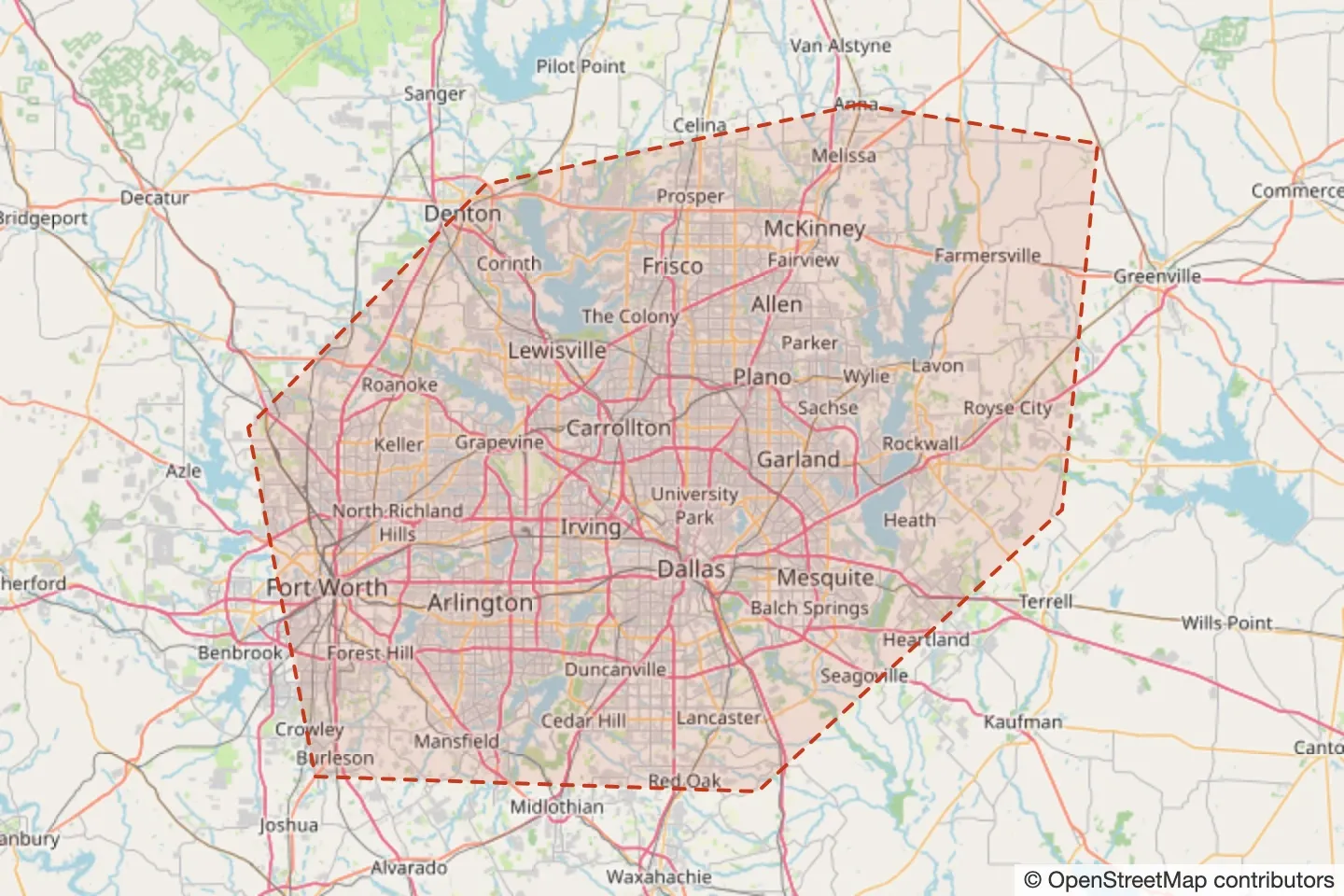
Our Plano crews also cover Frisco, Allen, Richardson, Murphy, Carrollton. If your property sits between two of these, call and we will tell you straight whether we can reach you.
Get Flood Damage Restoration in Plano, TX
If storm water or a large indoor flood has hit a Plano property, call before deciding anything is a total loss. We will walk it, tell you what is salvageable, and get extraction and drying moving — and we cover Frisco, Allen, Richardson as well.