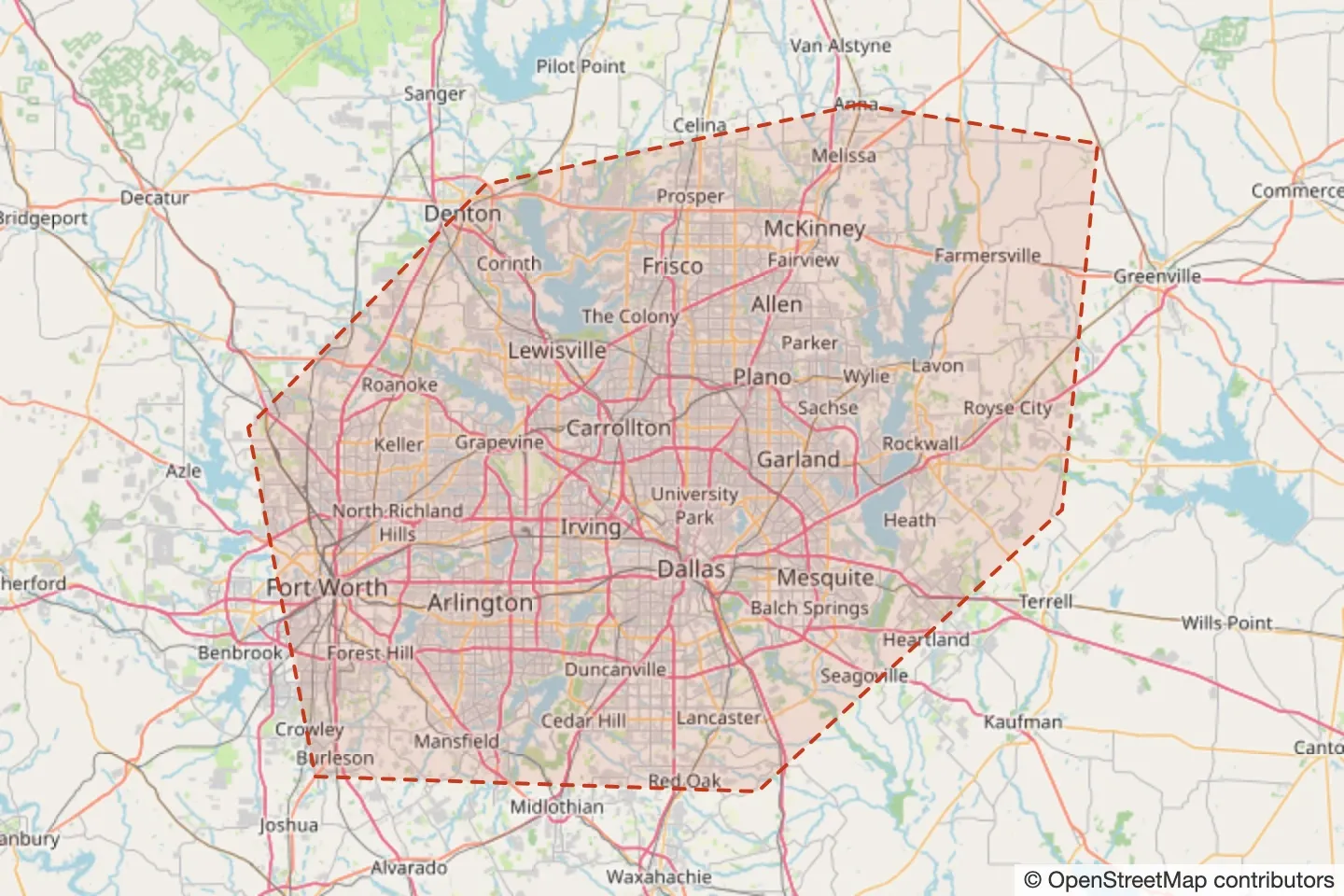
How Mold Testing Works in McKinney
We are a mold remediation company, and in Texas that matters for testing. Texas mold rules do not allow the same company to both assess a mold problem and remediate it on the same project. Assessment covers the sampling, the remediation protocol that says what has to be removed and how, and the clearance testing afterward. So we do not collect samples or clearance-test our own work. That is done by an independent, licensed mold assessment consultant; we carry out the remediation to the protocol they write.
Testing is a tool, not a starting point. Where growth is visible and the moisture source is obvious, the answer is usually cleanup and moisture correction, and a lab report would only confirm what you can already see. Where testing does earn its place — an odor with nothing visible, a real estate transaction, or a job large enough to need a formal protocol — we will say so plainly and tell you to start with an independent assessor.
That separation works in your favor. A buyer, a tenant, or an insurance adjuster is not going to take the remediation company's word that the job is done — a result from someone with no stake in the cleanup gives everyone a common reference point instead of a dispute about who is right.
When Mold Testing Makes Sense
Testing is not necessary every time mold comes up. It is worth the cost in a specific set of situations, and outside of those situations the money is usually better spent on the actual cleanup and moisture correction rather than on a lab report that will tell you what you can already see.
Testing is worth it when
You are buying, selling, or leasing a property
A documented lab result carries more weight in a transaction than a verbal opinion.
There is odor with no visible source
Sampling can help confirm elevated conditions when growth is hidden behind a wall, floor, or ceiling.
Remediation work just finished
Clearance testing by the independent assessor confirms the work area passed before it is closed up or you move back in.
An occupant is concerned
A documented result gives everyone in the property the same information to work from.
A landlord and tenant need a shared record
Independent sample results keep the conversation about facts rather than opinions.
The moisture history is unclear
When nobody is sure how long a material was wet, testing adds data an inspection alone cannot.
Mold Testing Methods
The assessor chooses the method based on the question being asked, and their report explains the results. What follows is a plain guide to what each method does, so you know what to expect — and once there is a report, we are glad to talk through what it means for the cleanup.
Air Sampling
Air samples capture spore counts in the air at a point in time, usually compared against a sample taken outside the building. This is the method most often used when the concern is odor without visible growth, or when someone wants a general read on indoor air conditions. Because outdoor air always carries some level of spores, the comparison matters more than the raw indoor number on its own.
Surface Sampling
Tape lifts or swabs collected directly from a suspect surface confirm whether growth is present on that specific material. This is a targeted method — it answers a question about one spot, not the whole property.
Bulk and Material Sampling
A physical piece of an affected material — a section of drywall, insulation, or wood — is sent for lab analysis. This is typically used when a material's condition, not just the presence of growth, needs to be documented.
Post-Remediation Clearance
After removal and cleaning, the independent assessor comes back to confirm the work area passes before it is closed up or rebuilt. In Texas that clearance comes from the assessor, not the remediation company — so on our jobs, we never test our own work. We schedule the rebuild around the assessor's clearance, not before it.
Mold Testing vs. Mold Inspection
Inspection identifies the likely source and the visible scope of a problem through a walkthrough, moisture readings, and material review. Testing adds a lab-confirmed data point on top of that. Visible mold and an obvious moisture source usually call for correction and cleanup regardless of what a sample says — a lab result does not change the fact that wet drywall needs to come out. See mold inspection for what that visit involves.
What Happens If Mold Test Results Are Elevated
An elevated result is a starting point, not a diagnosis. The next step is finding and correcting the moisture source behind it, then scoping the cleanup: containment where needed, removal of materials that cannot be cleaned, treatment of surfaces that can, and drying to confirm the area is back to normal. See mold remediation for how that process works, or mold removal if the growth is limited to visible surfaces. Once the work is finished, the assessor's clearance testing confirms the result.
We will not talk you out of testing just to move a job along, or push it on a problem where the answer is already obvious from looking at it. We will tell you which situation you are actually in.
One thing worth understanding before you get a report: there is no accepted standard for what counts as a "safe" indoor mold level, so results get interpreted by comparison — indoor versus outdoor, before versus after remediation — rather than measured against a fixed threshold. The assessor's report explains your specific numbers, and we will talk through what they mean for the work.
Request Mold Testing Guidance in McKinney, TX
If you are trying to decide between inspection, testing, and remediation, talk to us before you spend money on the wrong one. We will look at what you are dealing with and recommend the step that actually answers your question, whether that means starting with an independent assessment or moving straight into cleanup because the source is already obvious.
This applies to homeowners and to businesses — property managers, landlords, and commercial tenants ask us the same questions, usually with an added layer of paperwork for a lease or an insurance file. We work the same way regardless of who is asking: look at the actual conditions, recommend the step that fits, and put the findings in writing.