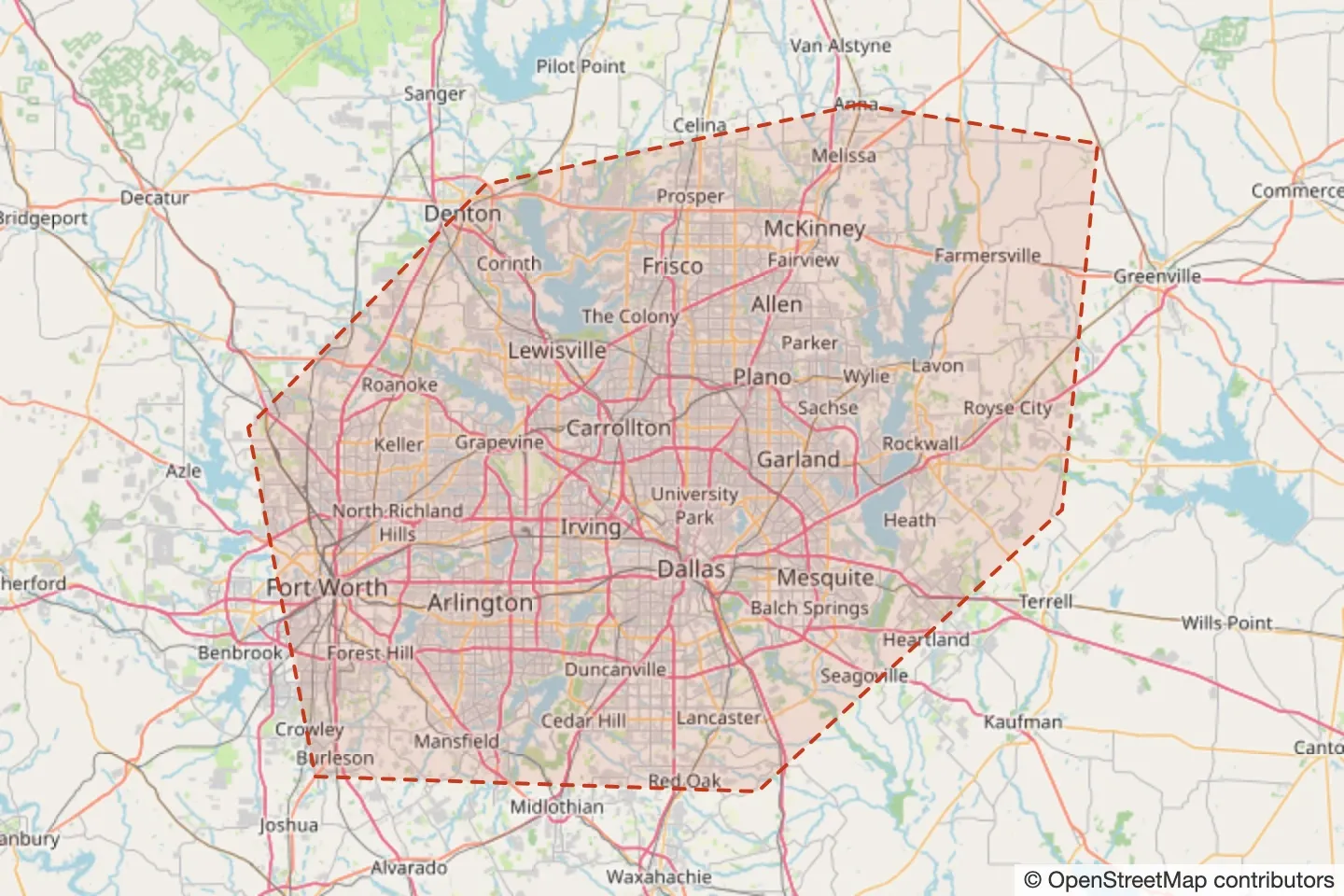
Flooring Contractors Serving McKinney, TX
We install flooring across McKinney, TX, as a restoration and rebuild contractor rather than a retailer's install crew. That distinction matters more here than on any other remodeling job: most flooring failures are not a bad product, they're a subfloor problem that was never checked before the new floor went down. We spend most of our year finding that exact problem on the restoration side of our business, and we bring the same standard to a planned flooring project.
We install and stand behind the work; we don't compete with big-box retailers on product catalogue or price per square foot, and we won't pretend to. What we compete on is what's underneath the floor you can see. If you already know exactly which product and finish you want, a retailer's install crew can put it down. If you want someone who checks what's under it first and will tell you honestly if it isn't ready, that's the job we're built for.
We take on flooring as a standalone project — a room or a whole house you have decided to update on its own timeline, with no damage event involved — as well as flooring that is part of a larger remodel. If you are also updating a bathroom or kitchen, that flooring is scoped as part of those projects; see bathroom remodeling and kitchen remodeling. This page covers flooring on its own.
Flooring We Install — Hardwood, Tile, Luxury Vinyl, Laminate, and Carpet
We install hardwood, tile, luxury vinyl plank, laminate, and carpet. Each holds up differently in a moisture-prone room: tile and luxury vinyl tolerate occasional water exposure far better than hardwood or laminate, which is worth factoring in for a bathroom, kitchen, or laundry area rather than choosing on looks alone. We'll walk through the tradeoffs for your specific rooms during the consultation rather than steering you toward one product line.
Installation time and complexity vary by material too. Tile and luxury vinyl plank install faster and tolerate a less-than-perfectly-flat subfloor better than hardwood. Solid hardwood needs the most preparation, including the acclimation period covered below, but holds its value and can be refinished multiple times over its life, which laminate and vinyl generally cannot. Carpet installs quickest of any material but is the least forgiving of moisture, which is worth weighing for below-grade rooms or areas near plumbing.
Replacing Flooring After Water Damage
This page starts from the point where the decision to replace has already been made. Whether a floor can be dried and saved instead of replaced is a separate assessment that lives on our water damage pages, and we won't repeat that process here — see hardwood floor water damage for that decision.
Once replacement is the answer, installing over a substrate that isn't actually dry is the most common reason a new floor fails again within a year or two. Before anything goes down, we verify moisture in the subfloor rather than assume it, and we check the subfloor's condition itself, not just its moisture content. If the same crew handled your structural drying, installation starts from the moisture readings that crew already took, not a fresh guess.
That continuity is the practical advantage of using one contractor for both halves. A separate flooring installer starting cold has to take our word — or start over — on whether a subfloor is actually dry enough to build on. We are working from our own readings, taken during our own drying process, so there is no second guess in the middle of the job.
Subfloor Preparation and Why It Decides the Result
Nearly every flooring failure we get called to look at is a subfloor failure wearing a flooring complaint. Before any finished material goes down, the subfloor gets inspected for damage, tested for moisture, and leveled or repaired where it needs it. Wood flooring also needs time to acclimate to the room's humidity before installation — skip that step and the boards can cup or gap later regardless of how well they were laid. Leveling matters just as much: a subfloor that's out of flat by even a small margin telegraphs through rigid flooring like tile and shows up as lippage between planks or a cracked grout line months after the crew that installed it is gone.
A moisture barrier goes between the subfloor and the finished floor in rooms where it's called for, particularly slab-on-grade areas common in North Texas construction, where moisture can move up through concrete over time even with no visible leak. This is the step a retailer's install crew is least equipped to evaluate, because it isn't the part of the job that shows — it's the part that decides whether the visible part lasts.
Underlayment is the other piece that matters more than its cost suggests. The right underlayment manages minor subfloor irregularities, adds sound dampening between floors, and in some products contributes a second layer of moisture resistance. Skipping it or using the wrong type for the finished material is a common source of squeaks, hollow spots, and premature wear that has nothing to do with the flooring itself.
Bring It Home: Get a Flooring Installation Estimate in McKinney, TX
Cost depends on material, room size, whether the old floor and any transitions need removing, and what the subfloor needs once it's inspected. Removal and disposal of the existing floor, leveling or repairing a damaged subfloor, and underlayment are all separate from the material and labor cost of the new floor itself, and they are the line items a per-square-foot number from a retailer typically leaves out.
We give a written estimate after seeing the space and checking the subfloor, not a per-square-foot figure over the phone, because that subfloor condition is exactly the variable a phone quote can't account for. Timeline runs from a day or two for a single room in tile or vinyl to a couple of weeks for hardwood across a larger area once acclimation is factored in.