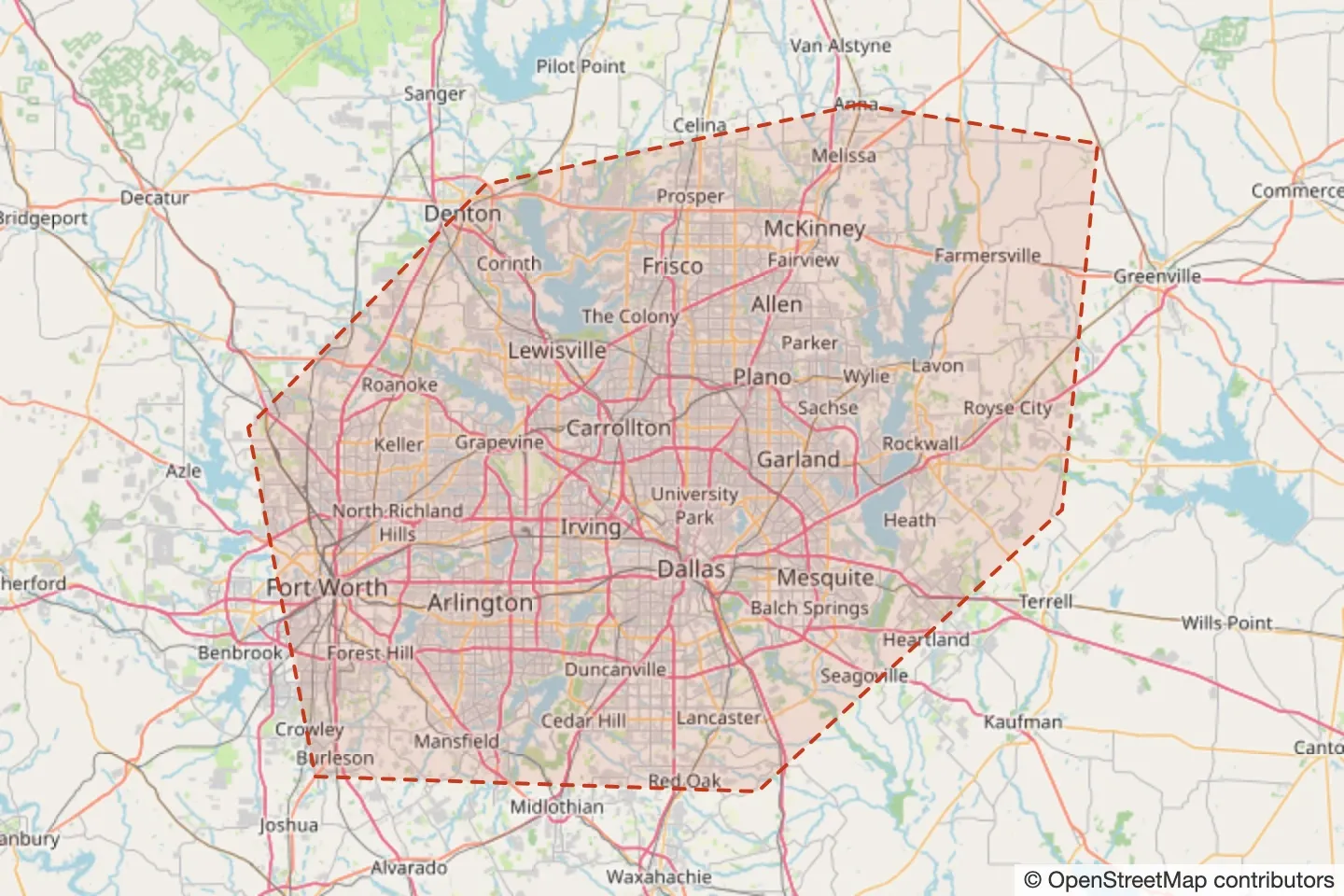
Professional Black Mold Removal for Homes and Businesses in McKinney
If you have found dark mold growth in your property, the sensible first step is having it looked at before anyone disturbs it. Our team in McKinney, TX assesses the affected area, finds the moisture keeping it alive, contains the work zone, removes materials that cannot be cleaned, and treats surfaces that can.
We will be straight with you about one thing up front, because a lot of what is written about this online is not. Dark color alone does not tell you what a mold is. Many species present as black or dark green, and the only way to identify one is laboratory analysis of a sample. Anyone who looks at a wall and names the species is guessing.
The practical implication is reassuring rather than alarming: the correct response is the same either way. Contain it, find the water, remove what cannot be salvaged, clean what can. Species identification changes the paperwork, not the work.
What to Do If You Find Suspected Black Mold
Before anyone touches it
Do not disturb it
Do not brush, scrape, sand, or vacuum it with a household vacuum. Agitating dry growth is what puts spores into the air and moves the problem into rooms that were clean.
Stop the water if you safely can
If there is an obvious active leak and shutting it off is straightforward, do that. If it means opening up building fabric, leave it.
Shut down HVAC serving that area
Air handling will distribute spores through ductwork into the rest of the property.
Photograph it before anything changes
Dated photographs of the growth and any water staining are useful later, for both scope and any insurance conversation.
Keep sensitive occupants out of the area
Anyone with asthma, allergies, chronic lung conditions, or suppressed immunity should stay clear until it has been assessed.
On health specifically: we are a restoration company, not a medical one. If anyone in the property has symptoms they are worried about, that is a conversation for a doctor. What we can tell you about is the property — how far the growth extends, what is keeping it wet, and what it takes to deal with it properly.
It is also worth resisting the urge to paint over it, which is a common instinct and makes the job harder. Coating growth traps moisture against the material and hides the extent from whoever assesses it next, so the affected area has to be found again the difficult way. If you want it out of sight in the meantime, tape a sheet of plastic over it rather than putting anything on it.
What Black Mold Removal Includes
What the work covers
- Inspection of visible growth and the moisture conditions sustaining it
- Identifying and correcting the water source
- Containment of the work area before anything is disturbed
- HEPA air filtration inside containment
- Removal of porous materials that cannot be cleaned
- Cleaning and treatment of salvageable hard surfaces
- Drying to a measured target
- Documentation, and repairs where material had to come out
The order matters more than any individual step. Containment goes up before removal starts, because the highest-risk moment in the whole job is the point where contaminated material is first disturbed.
Containment on a job like this is a sealed work zone with the air inside held at negative pressure, so air flows into the area rather than out of it. Anything released while material is being cut out gets captured by HEPA filtration instead of drifting down a hallway. It is the single biggest difference between a controlled removal and a well-intentioned clean that leaves the property worse than it started.
Black Mold on Drywall, Wood, Ceilings, and Floors
What can be saved depends on the material rather than the mold. Hard, non-porous surfaces — tile, sealed metal, glass, finished trim — can usually be cleaned and treated where the growth is on the surface and the substrate is sound.
Porous materials are different. Drywall, insulation, carpet and pad, ceiling tile, and particleboard absorb moisture into their structure, and growth follows it in. Cleaning the face of a piece of moldy drywall treats what you can see and leaves what you cannot, which is why affected drywall is generally cut back to sound material and replaced.
Structural timber usually sits in between. Wood can often be cleaned, dried, sanded back, and sealed, depending on how far growth has gone into the grain and whether the member is still sound. That is an assessment, not a rule — mold removal covers material-by-material decisions in more detail.
Inspection, Testing, and Verification
Testing is not always necessary. Where growth is visible and the moisture source is obvious, sampling largely confirms what everyone can already see, and the money is better spent on the remediation.
Testing earns its place when the source is unclear, when the affected area is likely larger than what is visible, when there is a musty smell but nothing to see, when a landlord and tenant or buyer and seller need an independent record, or when verification is wanted after the work is finished. Mold inspection covers assessment and moisture mapping; mold testing covers sampling and analysis.
What we will not do is talk you out of an independent assessment to keep the job simple, or push one you do not need. We will say which situation you are in.
One point about post-work verification worth knowing: in Texas, clearance testing after remediation is done by a licensed assessor who is independent of the remediation company. We never clearance-test our own work, so the result you get is one you can rely on rather than one we marked ourselves.
Get Help With Black Mold in McKinney, TX
If you have found dark growth in your property, leave it undisturbed and have it assessed. We will identify how far it extends, find what is keeping it wet, explain what can be cleaned and what has to be removed, and put a written scope in front of you. The on-site assessment is free and there is no obligation to proceed.
One honest caveat, because it is the thing people most want to hear and it is not true of anyone: no company can guarantee a property will be permanently free of mold. Spores exist in every indoor environment. What we can do is remove the growth, correct the conditions that let it establish, and document what was done — and if the moisture source is properly fixed, it does not come back. See mold remediation for the full process.