24/7 Water Removal and Extraction in McKinney, TX
We provide emergency water removal in McKinney, TX for homes and businesses with standing water, soaked flooring, flooded rooms, appliance leaks, plumbing failures, and storm water intrusion. Extraction is the first physical step in almost every water damage job — before drying can start, before moisture readings mean anything, the water that is sitting on your floor or soaked into your carpet has to come out. We move fast because every hour that water sits is another hour it spends working its way into subfloor, baseboards, and framing.
Hardwood, laminate, and engineered flooring are especially unforgiving. Water that sits on top of these floors for even a short time can work into the seams and cause boards to cup or swell, and once that happens drying alone will not always bring the flooring back flat. Getting extraction started quickly is often the difference between saving a floor and replacing it.
When Standing Water Needs Professional Extraction
A small spill or a puddle from a minor drip is something most homeowners can mop up themselves. Professional water extraction becomes necessary once water has pooled across a floor, soaked into carpet or carpet pad, run under cabinets or baseboards, or come from a source that raises contamination concerns. The volume of water is only part of it — how long it has been sitting and what it has touched matter just as much.
Call for extraction when
Water covers more than a small area of flooring
Standing water spreads under baseboards and flooring seams faster than it looks like it should.
Carpet, carpet pad, or rugs are soaked through
Padding holds water long after the surface looks dry, and it keeps feeding moisture back into the room.
The water came from an appliance, plumbing failure, or storm
Each source carries different contamination risk, which changes what equipment and precautions are used.
Water has been sitting for more than a few hours
The longer it sits, the more it spreads into materials that then need to be dried instead of just wiped.
Extraction Equipment and First-Response Steps
We use truck-mount and portable extraction equipment depending on the size of the loss and how the property is set up. Truck-mounts pull a much stronger vacuum and can run continuously off the vehicle, which makes them the right choice for large losses with a lot of standing water and easy exterior access. Portable extractors trade some of that lift capacity for reach — they go where a hose from the truck cannot, which matters on upper floors, in condos and apartment buildings, and in interior rooms far from a driveway or parking area.
On carpet, we typically run a weighted extraction wand across the surface in overlapping passes, which presses down through the carpet and pad to draw water up rather than just skimming what has pooled on top. A single pass rarely gets everything the pad is holding, so we go over saturated areas more than once before moving on. Hard flooring gets a different approach — squeegee-style tools push standing water toward a point where it can be extracted directly, which is faster than a wand on a non-absorbent surface.
On arrival, we also identify the water source and confirm it is safe to work in the space before extraction starts. Once extraction is underway, every gallon removed mechanically is a gallon that dehumidifiers do not have to pull out of the air over the days that follow — bulk extraction is dramatically faster than evaporative drying, which is why we push to get as much water out physically as possible before switching to air movers and dehumidifiers.
Once the bulk of the standing water is gone, we take moisture readings in the affected materials — flooring, baseboards, drywall, and subfloor where accessible — so we know what is actually wet versus what only looks wet on the surface. That reading is what decides the next step: dry in place, or remove and replace.
What Happens After Water Removal
Extraction gets the standing water out, but it is not the end of the job. Once the floor is clear, we set air movers and dehumidifiers to dry what remains in the flooring, walls, and subfloor, and we monitor those readings over the following days until the space is back to a normal moisture range. That drying and monitoring work is covered in detail on our structural drying page, and the broader emergency stabilization process — of which extraction is one part — is what we call water mitigation.
What our water extraction service covers
- Standing water removal from floors and saturated materials
- Contamination screening on the water source
- Moisture readings on flooring, baseboards, and subfloor
- Air mover and dehumidifier setup after extraction
- Removal of carpet pad or materials that cannot be saved
- Photo and moisture documentation for your records
Common Sources of Extracted Water
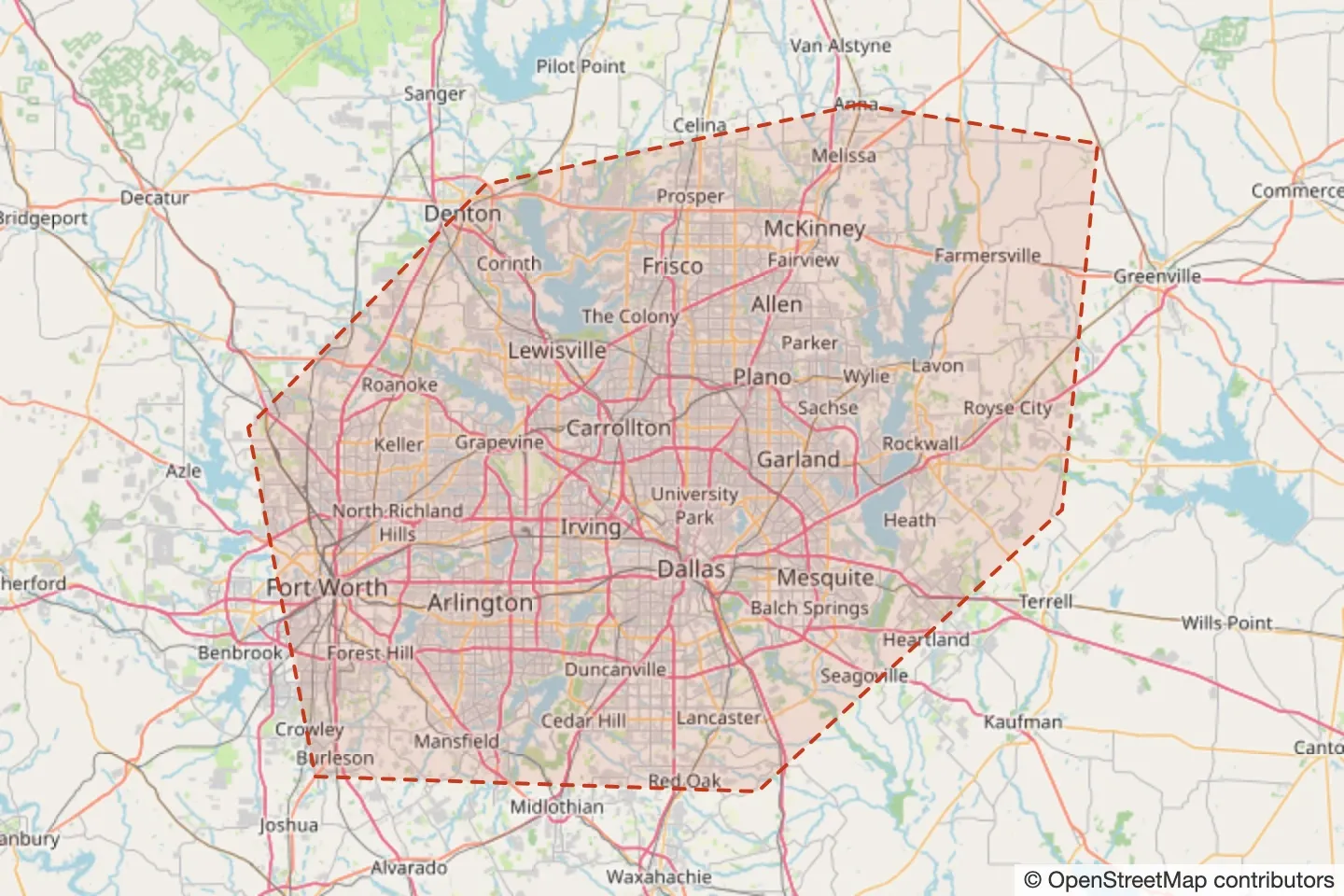
Most of the extraction calls we run around McKinney and DFW trace back to a short list of causes: a washing machine or dishwasher supply line letting go, a water heater failing, a toilet or tub overflowing, a slab or roof leak that finally showed itself as a wet ceiling or floor, or storm water finding its way in through a low point in the yard or foundation. Where the loss involved storm water at scale, that is closer to flood damage restoration, and where the water was contaminated by sewage or a backup, that falls under sewage cleanup instead — the extraction step looks similar, but the handling and precautions change.
Slab leaks are worth a specific mention because they are so common here. The expansive clay soils across North Texas swell and shrink with moisture, and that movement flexes the slab a home sits on. Copper and PEX supply lines that run through or under the slab take that stress at their joints and fittings, and over years of seasonal soil movement a line can develop a slow leak long before anyone notices a drop in water pressure. By the time it shows up as a warm spot on the floor or water tracking out from under a wall, there is usually more moisture already in the slab and subfloor than the visible sign suggests, which is why we check beyond the obvious wet area on any suspected slab leak.
Water heaters and washing machine supply lines fail for a more mundane reason: age. Rubber supply hoses and the tank fittings on a water heater are wear items, and both tend to let go without warning rather than leaking slowly first, which is why these two sources account for a disproportionate share of our overnight and weekend calls.
Residential and Commercial Extraction
We extract water from houses, apartments, and rental units as well as offices, retail spaces, and other commercial properties around McKinney and DFW. The equipment and process are largely the same; what changes on a commercial job is scale and disruption — a business may need extraction and drying set up around operating hours, and a property manager may need documentation that speaks to multiple stakeholders rather than a single homeowner. We adjust scheduling and communication accordingly, without changing how thoroughly the water gets removed.
Multi-unit buildings and offices also raise a question single-family homes usually do not: whether water has traveled between floors or units. A leak on an upper level can extract cleanly from the unit where it started and still leave a wet ceiling below, so on multi-story properties we check adjoining spaces rather than assuming the damage stopped where the water was first noticed.
Call Superior Emergency Restoration for Water Extraction in McKinney, TX
If standing water is spreading through your home or business in McKinney, TX, call us. We will get extraction equipment on site, remove the water, check moisture in the surrounding materials, and set up drying — with a documented record of what was done at every step.