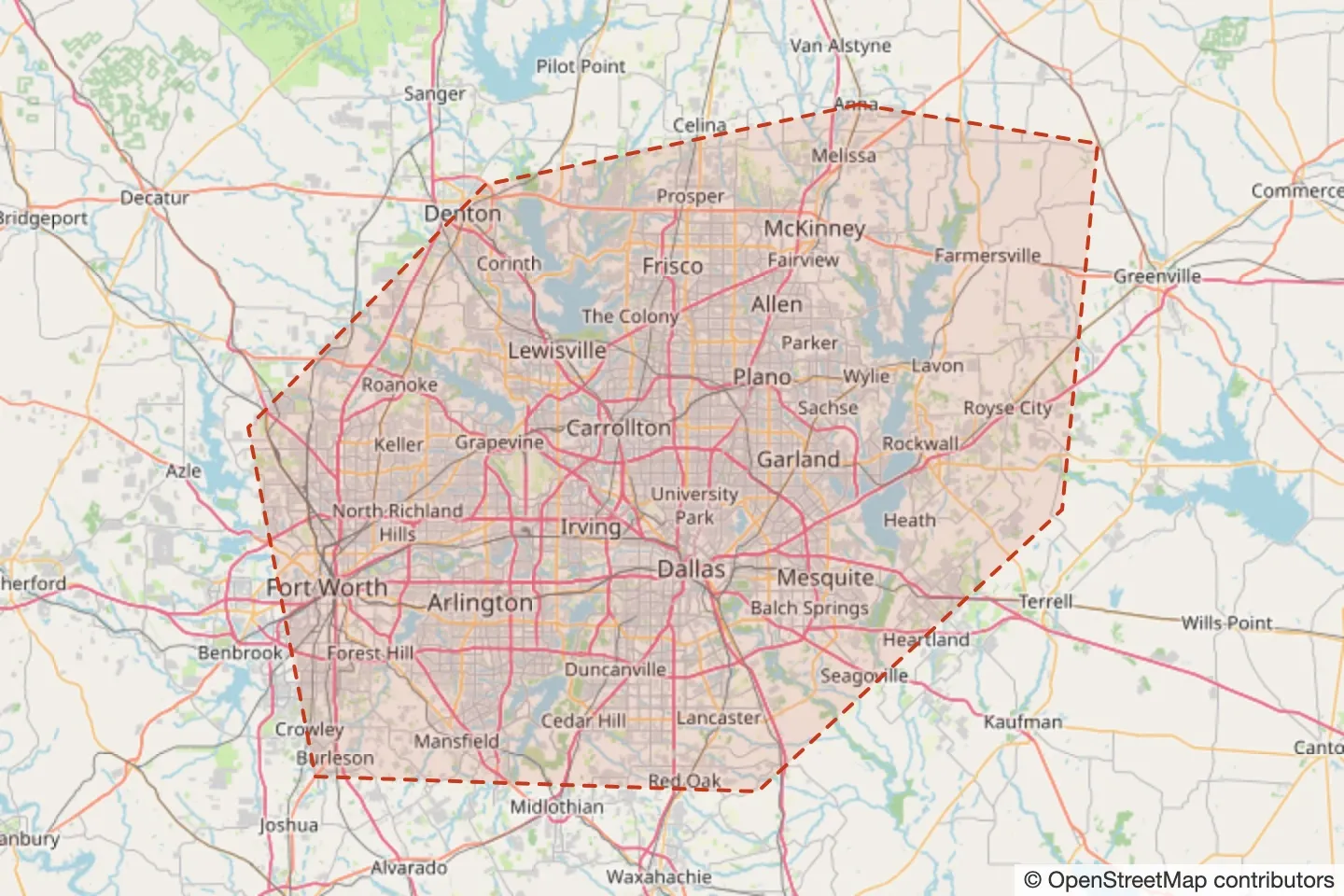
Professional Mold Inspection for Homes and Businesses in McKinney
If you have spotted a patch of mold, smelled something musty that will not go away, or just had a leak dry out and want to know whether it left something behind, the fastest way to get a straight answer is to have someone look at it in person. Our mold inspection service in McKinney, TX walks the property, finds where moisture is actually coming from, checks the materials involved, and tells you plainly what — if anything — needs to happen next.
An inspection is not a sales visit. The point is information: how far a problem actually goes, what is causing it, and whether the right next step is cleaning a small spot yourself, scheduling removal, running a lab test, or moving into full remediation. We document what we find with photos and moisture readings as we go, which matters if you are working with an insurance carrier, a landlord, a tenant, or a buyer on the other side of a sale — though what a carrier decides to cover is always the carrier's call, not ours.
When You Should Schedule a Mold Inspection
Some situations are obvious. Others are not, and that is usually where an inspection earns its keep — the room that smells wrong but shows nothing to the eye, or the ceiling stain that might be old and dry or might be active right now.
Reasons to schedule an inspection
Visible spotting or discoloration
On a wall, ceiling, floor, or piece of trim — even a small patch is worth a look before it spreads further.
A musty or earthy smell that will not clear
Odor without visible growth usually means it is behind something — under flooring, inside a wall, or above a ceiling.
Condensation on windows, ducts, or pipes
Persistent condensation means a surface is regularly wet enough to support growth over time.
A recent leak, flood, or appliance failure
If materials stayed wet for more than a day or two, checking for follow-on growth is worth the trip.
Buying or selling a property
An inspection gives both sides a documented answer instead of a guess before closing.
High humidity in an attic or crawl space
These spaces run wetter than living areas and often go unchecked for years at a time.
What a Mold Inspection Includes
A thorough inspection works through the same sequence every time, whether the concern is one bathroom or an entire commercial building.
Visual Inspection
We walk the affected area and the spaces around it, not just the room where mold was noticed. Growth often extends further than what is visible from the doorway, and materials that look fine on the surface can be hiding a problem underneath.
Moisture and Humidity Checks
A moisture meter tells us which materials are currently wet, which have been wet recently, and which are dry — information you cannot get by looking. Relative humidity readings in attics, crawl spaces, and bathrooms round out the picture.
Affected Material Review
Drywall, wood, insulation, carpet, and hard surfaces all hold moisture and support growth differently. Knowing which materials are involved is what determines whether the next step is cleaning, removal, or full remediation.
Source Identification
Every mold problem has a moisture source behind it — a roof leak, a plumbing failure, condensation, ground moisture, or ventilation that is not doing its job. Finding that source is the actual point of the visit. Without it, any cleanup just resets the clock until the material gets wet again.
Recommendations and Documentation
You get a plain explanation of what we found, photographs, and a written recommendation for what to do next — whether that is same-day cleanup, scheduled removal, lab testing, or nothing at all if the concern turns out to be minor.
Mold Inspection vs. Mold Testing
These two terms get used interchangeably and they are not the same service. Inspection is a visual and moisture-based assessment — we look, we measure, and we tell you what the conditions in the property indicate. Testing means collecting air or surface samples and sending them out for lab analysis — and in Texas that is done by an independent licensed mold assessor, not by the company doing the remediation.
Most of the time, inspection is enough. If growth is visible and the moisture source is clear, a lab result mostly confirms what everyone can already see. Testing earns its place when the source is unclear, when there is odor without visible growth, or when you need a documented, independent result for a real estate transaction, a landlord-tenant matter, or verification after remediation work. See mold testing for how sampling works and when it makes sense.
We would rather tell you testing is not needed than send you off to pay for it. If a walkthrough and a moisture reading answer the question, we will say so and skip straight to a recommendation instead of adding a lab result that just confirms what is already obvious from standing in the room.
What Happens After Mold Is Found
What we recommend depends entirely on what the inspection turns up, not on a standard package we sell everyone. Two properties with the same visible spot on a bathroom ceiling can need two completely different plans once we know whether it is surface staining on paint or a wall cavity that has been damp for weeks.
A small patch of visible growth on a hard surface is usually a mold removal job. Growth connected to a wet wall cavity, multiple rooms, or an unresolved moisture source moves into full mold remediation. Dark-colored growth over a larger area gets covered under black mold removal — appearance alone does not identify a species, so the plan focuses on containment and correction rather than a guess about what it is. Attic findings route to attic mold removal, and anything found under the house goes to crawl space mold removal. If the source turns out to be an active leak or recent flooding, that gets handled through water damage restoration first, since drying the property properly is what stops the mold problem from restarting.
One thing we will not do is promise a property will be permanently free of mold once the work is finished. Spores exist in every indoor environment, indoors and out. What we can do is document what we found, help correct the moisture source, and make sure whatever needs cleaning gets cleaned properly.
Schedule a Mold Inspection in McKinney, TX
If you have noticed mold, smelled something musty you cannot place, or want a property checked before or after a sale, we can come take a look. You will get a plain explanation of what is there, what is causing it, and what — if anything — needs to happen next.