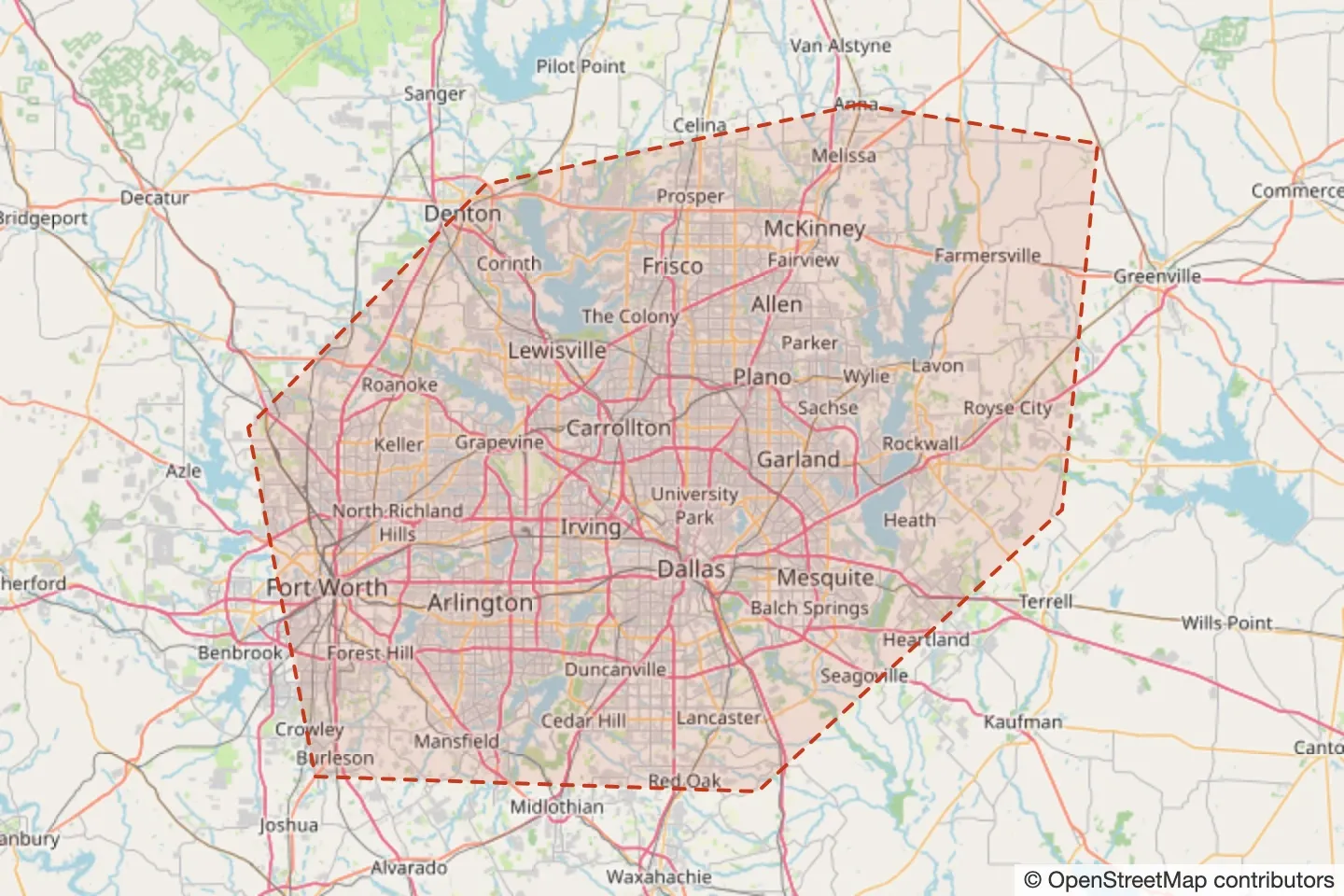
Emergency Burst Pipe Cleanup in McKinney, TX
A burst pipe does not wait for a convenient time, and the water does not stay where the pipe is. We provide burst pipe cleanup in McKinney, TX for homes and businesses hit by broken supply lines, frozen pipes, and sudden failures anywhere in a property — extracting standing water, drying the structure, documenting the loss, and coordinating with a plumber for the repair itself.
Our part of the job is the water and the drying. The pipe repair is a licensed plumber's work, and we will tell you that plainly rather than let you assume it is included — but restoration can usually start extracting and drying the same visit, even before the pipe itself is fixed.
A lot of the breaks we see here are not the classic frozen-pipe story — they are supply lines running under the slab itself. Most homes across the Dallas–Fort Worth area sit on expansive clay soil, which swells when it is wet and shrinks when it dries out. That constant movement puts stress on rigid pipe running beneath the foundation, and over years it is a common way a slab supply line eventually cracks or splits. A break like that is not always obvious right away, because the water often finds its way up along the path of least resistance rather than straight through the slab where it broke.
What to Do When a Pipe Bursts
If you know where the main shutoff valve is, close it — that stops the flow faster than waiting for a plumber to arrive. Avoid standing water anywhere near outlets, switches, or appliances, and stay off a ceiling below that is sagging or dripping. Move furniture and valuables away from the water if it is safe to do so, and take photos of the affected areas before cleanup starts. Do not cut into walls or pull up flooring yourself before we have had a chance to see how far the water traveled — early demolition can lose information that matters for both drying and your insurance claim.
If you cannot locate the main shutoff, do not spend long searching under pressure — most slab homes have it near the water heater, at the meter box by the street, or just inside the garage wall, but a plumber or our crew can find it quickly if you cannot. If water has reached an electrical panel or any outlet below the waterline, shut off power at the breaker if you can reach it safely, and stay out of that water until someone has confirmed it is safe.
Water Extraction and Drying After Pipe Failure
Once the water is off, extraction comes first — pulling standing water from floors, carpet, and any cavities it reached, using truck-mounted or portable equipment depending on the volume. From there we inspect walls, subfloor, and cabinetry near the break to see how far moisture traveled, since a pipe failure inside a wall or under a floor almost always spreads further than the visible wet patch suggests.
Structural drying equipment — air movers and dehumidifiers — is placed to a plan and monitored daily against moisture readings, not left running on a guess. Drywall can often be dried in place if the response was fast, sometimes by drilling discreet holes near the base of the wall to push dry air into the cavity rather than removing the wall outright.
When the break is under the slab rather than in a wall, the drying picture changes. There is no cavity to dry into behind a baseboard — the water has spread across and sometimes under the flooring itself, following seams and low points across a wide area rather than staying near the break. Because most homes here have no basement to catch that water and hold it in one place, a slab leak can affect several rooms away from where the pipe actually failed, which is why we map the full extent before deciding what needs to be pulled up.
Frozen Pipes, Supply Lines, and Ceiling Leaks
Frozen pipe failures happen less often here than in colder climates, but North Texas gets cold snaps that catch homes without adequate insulation off guard, and a pipe that freezes and splits can go unnoticed until it thaws and starts spraying. Supply line failures — a washing machine hose, a water heater connection, a refrigerator line — are far more common, and because they often run behind cabinetry or through a wall, the leak can run for hours before anyone sees it.
Exterior hose bibs and any supply line run through an uninsulated garage or attic are the other common cold-weather failure point, since those areas do not get the same steady heat as the living space and can drop below freezing during a hard freeze even when the rest of the house stays warm.
A pipe that breaks on an upper floor or in an attic sends water straight down through the ceiling below, which is its own kind of job. Ceiling water damage covers what happens when a burst line above a room soaks the ceiling assembly rather than the floor.
Act quickly when
You cannot find or reach the shutoff valve
Call for help rather than searching under pressure while water keeps flowing.
Water is near outlets or electrical panels
Stay clear and avoid contact with water in those areas until power is confirmed safe.
A ceiling below is sagging or dripping
That ceiling is holding trapped water and can fail without further warning.
The water source is unclear
A slow, hidden leak behaves differently than a sudden break, and the moisture check needs to match it.
Hidden Moisture and Mold Prevention
A burst pipe rarely soaks only what is visible. Water travels along subfloor, inside wall cavities, and under baseboards well past the edge of the wet patch on the surface, which is why we take moisture readings across the affected area and adjacent rooms rather than treating only the obvious spot. Materials left wet inside a closed cavity are exactly the conditions mold needs, so drying to a verified target — not just until things look dry — is the real prevention step.
We will not promise a property will never develop mold; nobody honestly can. If visible growth or a persistent musty smell shows up once material is opened, that becomes a job for mold remediation rather than something cleaning solves on its own.
Insurance Documentation After Burst Pipe Damage
From the first visit we photograph the affected areas, log moisture readings, and record what equipment was placed and for how long. That documentation is what most customers bring to their insurer, and it holds up far better than a description written from memory weeks later. To be direct about what we do not control: whether the loss is covered, and what is paid toward it, is a decision your carrier makes. We document the loss thoroughly and answer the adjuster's questions; we do not promise a claim outcome.
Call Superior Emergency Restoration for Burst Pipe Cleanup in McKinney, TX
If a pipe has burst in your home or business, do not wait to see how far the water spreads. We can extract standing water, start structural drying, and document the loss while you arrange the plumbing repair. A real person answers 24/7, our technicians are IICRC certified, and the on-site estimate is free.