Emergency Water Damage Restoration in McKinney, TX
When water damages your home or business, the first priority is stopping the spread, removing standing water, and starting controlled drying before the damage gets worse. We provide water damage restoration in McKinney, TX for burst pipes, flooding, appliance leaks, sewage backups, storm water, and hidden moisture problems. Our team inspects the affected areas, begins water mitigation, documents the damage, and builds a restoration plan for your property.
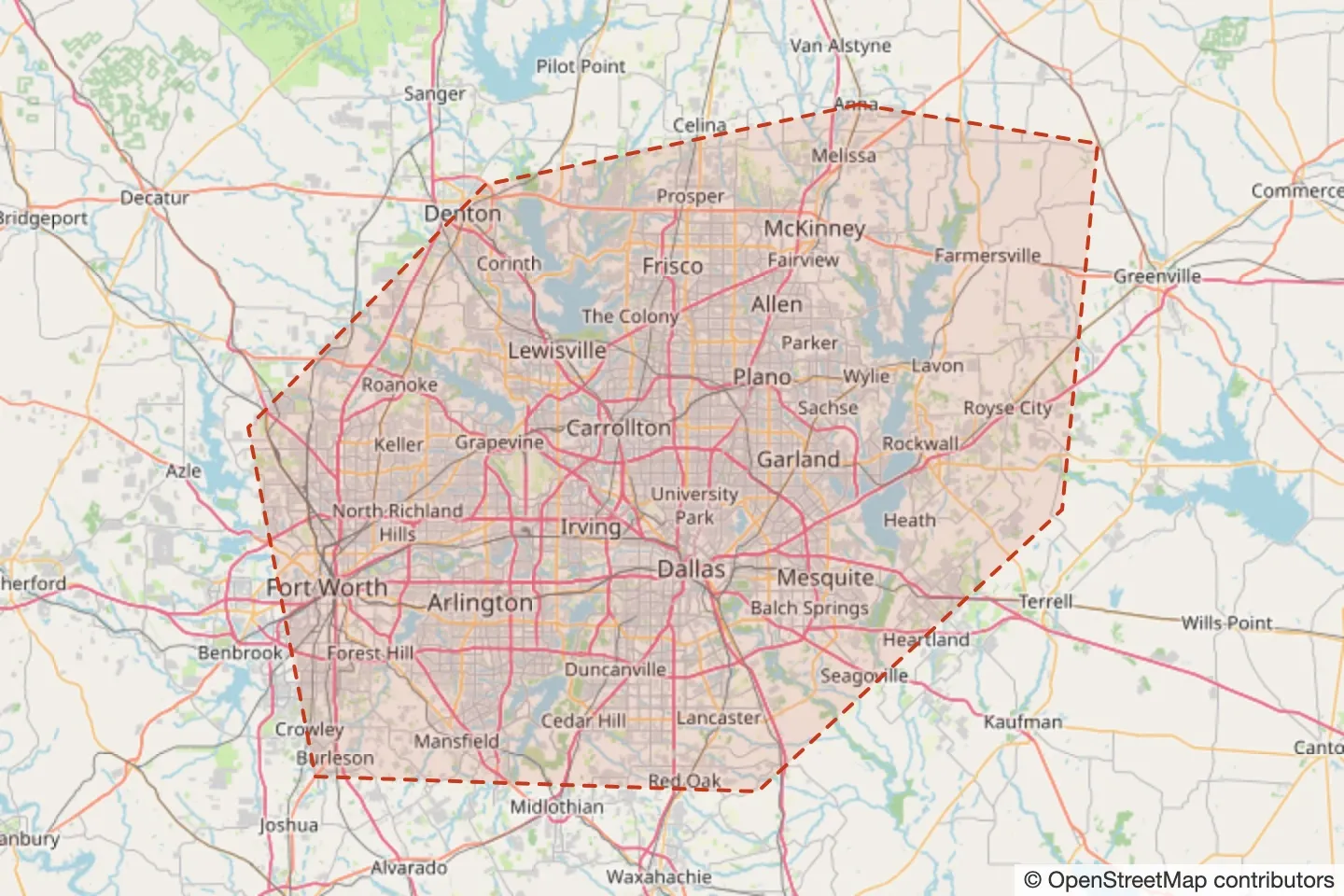
A real person answers 24/7, and our crews are based in Collin County — so a dispatch across the metroplex is a normal drive, not a promise we hope to keep. If the source is an active plumbing failure or a roof leak, we will tell you plainly when a plumber or roofer needs to make the repair before drying can finish.
What Water Damage Restoration Includes
“Water damage restoration” covers more than pumping out standing water. It is the full sequence from first inspection through the point where your property is dry, clean, and ready to be put back together.
What the work covers
- Inspection and moisture detection across affected and adjacent areas
- Water extraction and removal from floors, carpet, and cavities
- Water mitigation to stop damage spreading into unaffected materials
- Structural drying and dehumidification with daily monitoring
- Cleaning and sanitizing based on the water category
- Contents protection, pack-out, or disposal guidance
- Repair and reconstruction once drying targets are met
Cleanup and repair are different phases, and it matters which one you are being quoted for. Cleanup gets the water out and the structure dry. Repair puts back what had to be removed. We handle both, which is why there is no handoff gap in the middle of your project.
Common Water Damage Problems We Restore
Burst Pipes and Plumbing Leaks
Broken supply lines, pipe bursts, and slow leaks behind bathroom and kitchen walls are the most common losses we see. A washing-machine supply line running unnoticed can put hundreds of gallons into a structure in an afternoon, and because the water enters behind cabinetry and under flooring, the visible wet patch is usually the smallest part of the problem.
Our scope is the water and the drying. A licensed plumber makes the pipe repair itself, and we will say so plainly rather than let you assume it is included. Where a burst line has soaked framing and subfloor, burst pipe cleanup covers how those cavities get opened, dried, and verified.
Appliance Leaks and Overflows
Washing machines, dishwashers, refrigerator ice-maker lines, water heaters, bathtub overflows, and toilet overflows. Appliance failures are deceptive because the appliance sits flush to the cabinet run: water tracks along the subfloor and into the toe kick, so the first sign is often a soft spot in the floor or a cabinet base that has started to swell weeks later.
These losses usually need cabinetry lifted or drilled to dry the cavity underneath rather than just fans pointed at the room. Dishwasher leaks and refrigerator line failures each have their own patterns worth reading if that is what happened to you.
Flooding and Storm Water
Heavy North Texas rain, exterior water intrusion, and sump pump failures. Storm water is a different problem from a clean supply-line break: it arrives carrying soil, lawn chemicals, and whatever it crossed on the way in, which pushes the loss into a higher contamination category and changes what can be salvaged.
Because most homes here are slab-on-grade rather than basemented, DFW flooding tends to spread horizontally across a large floor area instead of collecting in one low point — which means more square footage affected and more drying equipment, not less. Flood damage restoration covers that work in detail.
Sewage Backups and Contaminated Water
Sewage backups are a health hazard, not just a mess. Water that has been in contact with waste carries bacteria and other pathogens, and porous materials that absorbed it — carpet, pad, drywall, particleboard, insulation — generally cannot be cleaned back to a safe condition. They come out.
That work needs containment so contamination is not tracked through the rest of the property, protective equipment for the crew, and controlled disposal of what is removed. It is not a job to attempt with a shop vac and household cleaner. Sewage cleanup explains the process, including how the affected area is sealed off while work is underway.
Our Water Mitigation and Restoration Process
Mitigation and restoration are two halves of the same job. Mitigation is everything that stops the damage getting worse — extraction, containment, and drying. Restoration is what returns the property to the condition it was in. Water mitigation covers the first half in detail; the sequence below is how a typical job runs from the first visit through to the point repairs can start.
Inspection and Moisture Mapping
We identify affected materials, trace how moisture has migrated, and flag safety hazards before anyone starts pulling material out. Readings are recorded from the first visit.
Moisture mappingWater Extraction
Standing water comes out of floors, carpet, crawl spaces, and affected rooms with truck-mounted and portable extraction before drying equipment goes in.
Water extractionDrying, Dehumidification, and Monitoring
Air movers and dehumidifiers are placed to a drying plan, then checked daily against moisture targets. Equipment stays until the readings say the structure is dry, not until the surface looks dry.
Structural dryingCleaning, Sanitizing, and Restoration Planning
Cleaning depends on the water category and the materials involved. Once drying targets are met, we set out what needs rebuilding and in what order — drywall, flooring, cabinetry, and paint.
Repairs and rebuildStructural Drying and Moisture Control
Drying is not the same as removing visible water. Moisture stays in drywall, insulation, subfloor, cabinets, trim, carpet pad, and framing long after a floor feels dry underfoot. That trapped moisture is what causes warped flooring, failing adhesives, and microbial growth weeks after the original loss.
Wall, Floor, and Cabinet Drying
Some materials can be dried in place. Others have to come out — and which is which depends on the water category, how saturated the material is, and how long it stayed wet. We will not tell you your flooring is salvageable before we have measured it.
Drywall is usually dryable if the water was clean and the response was quick, often by drilling discreet holes at the base plate and pushing dry air into the wall cavity rather than removing the wall. Cabinets are harder: the boxes are frequently particleboard, which swells and loses structure once saturated, and the toe kick traps water where no fan reaches it. Engineered wood and laminate flooring rarely survive a soaking, while solid hardwood sometimes does if it is dried slowly enough to avoid cupping.
Every drying plan has a target, and the target is not “feels dry”. We take a baseline reading from unaffected material of the same type elsewhere in the property, then dry until the affected material reaches it. That is the number that determines when equipment comes out — and it is recorded, so you can see it rather than take our word for it.
Category 1, Category 2, and Category 3 Water Damage
Restoration work is categorised by how contaminated the water is. The category drives what can be dried, what must be removed, and what protective handling the job requires.
The three water categories
Category 1 — clean water
From a sanitary source such as a supply line break or an overflow with no contaminants. Most materials can be dried in place if the response is fast. Category 1 can degrade to Category 2 if it sits or contacts contaminated materials.
Category 2 — grey water
Carries some contamination — appliance discharge, some toilet overflows without solids, aquarium or waterbed water. Requires more careful cleaning and harder decisions about porous materials.
Category 3 — black water
Grossly contaminated: sewage, rising flood water, or water carrying hazardous material. Requires protective equipment, containment, and removal of most porous materials that were saturated.
Category 3 losses are handled under our sewage cleanup process, with containment and disposal appropriate to the contamination.
Water Damage, Mold Risk, and Indoor Air Concerns
Mold needs moisture, and wet building materials supply it. Drying quickly and verifying with readings is the practical prevention — which is why we monitor rather than assume. What we will not do is promise a property will never develop mold; nobody honestly can.
If there is already visible growth or a persistent musty smell, that is a remediation job rather than a drying job. Mold remediation covers containment, removal, and how independent clearance works.
Residential and Commercial Water Damage Restoration in McKinney, TX
Homes, Condos, Apartments, and Rental Properties
We work with homeowners, landlords, tenants, and property managers across the metroplex. For rentals and multifamily, we document clearly enough that owners and occupants are looking at the same information — which removes most of the argument about what was damaged and when.
In multi-unit buildings, water rarely stays in the unit it started in. A failure on an upper floor travels through the ceiling assembly into the units below and often into shared walls, so the inspection covers adjacent units rather than just the one that called.
Commercial Buildings and Facilities
Offices, retail, restaurants, warehouses, and multifamily properties. Commercial losses are usually less about the water and more about continuity — keeping part of the building open, scheduling around trading hours, containing the work area, and producing documentation the owner and their insurer can both use.
Insurance Documentation for Water Damage Restoration
From the first visit we record photographs, moisture readings, drying logs, and an itemised scope of the work. Most customers use that documentation when they speak to their insurer, and adjusters generally prefer it to a written description after the fact.
To be straight with you about what we do not control: whether a loss is covered, and how much is paid, is between you and your carrier. We document thoroughly and answer their questions. We cannot promise an outcome on a claim, and you should be careful of any restoration company that does.
What documentation usually includes: dated photographs of each affected area before work begins, moisture readings taken at the same points across the drying period, a record of what equipment was placed and for how long, and an itemised scope of what was removed and why. Where materials had to be discarded, we photograph them first.
The practical reason this matters is timing. Once a property is dried and repaired, the evidence of the original loss is gone. A claim questioned six weeks later is far easier to answer with readings and photographs from day one than with a recollection of how wet the room looked.
Call Superior Emergency Restoration for Water Damage Restoration in McKinney, TX
If water is spreading through your property, do not wait to see whether it dries on its own. We can inspect the damage, extract the water, start controlled drying, and walk you through what cleanup, documentation, and repairs will involve. Estimates on site are free, our technicians are IICRC certified, and the crew that dries your property is the crew that rebuilds it.