Emergency Burst Pipe Cleanup in Plano, TX
A pipe does not fail on a schedule, and once it lets go, the water does not wait for anyone to notice. Burst pipe cleanup covers the extraction and drying side of a failed supply line — repairing the pipe itself is a licensed plumber's work, and we say that plainly rather than let anyone assume it is part of our scope. Our crews are based in Collin County, so this is home ground — dispatch here is a short drive rather than a cross-metro run. What we handle is getting water out of the property and drying the structure before burst pipe water damage spreads further than it already has.
Most Plano properties sit on a slab rather than a basement, and the ground underneath is expansive clay that swells and shrinks with the seasons. That movement stresses rigid supply lines running under the slab, and a line that finally splits after years of that stress behaves differently than a straightforward frozen pipe — the water often surfaces well away from where the pipe actually broke.
A burst pipe is almost always clean, Category 1 water at the moment it fails, which is the best-case scenario for saving affected materials — but only if extraction and drying start quickly. Water left sitting for more than about 48 hours starts to reclassify itself simply through contact with building materials and time, which is one more reason speed matters here.
What to Do When a Pipe Bursts
The first move is stopping the water at the source — shutting off the main water valve if you can reach it safely, since that limits how much burst pipe water damage happens before help arrives. After that, avoid stepping into standing water near outlets or electrical fixtures, and do not try to move heavy, waterlogged furniture alone.
Once the flow is stopped, pipe burst cleanup starts with extraction, using the same process covered on our water extraction page — pulling standing water from flooring, cabinetry, and any cavity it reached before it has time to travel further or soak deeper into porous material.
If the main valve is not accessible or you are not sure which valve controls which line, do not spend time guessing — call your plumber or call us, and we can help walk you through it over the phone while help is on the way. A few extra minutes spent searching for the right valve is not worth the additional water damage it can cause.
Water Extraction and Drying After Pipe Failure
After extraction, we check how far moisture traveled through wall cavities, subfloor, and baseboards, because burst pipe restoration almost always involves water that spread past the visible wet patch. A supply line failure inside a wall or under a floor pushes water sideways along the path of least resistance, so the affected footprint is usually larger than what is visible on the surface.
When the break is under the slab, there is no basement to catch that water and hold it in one place, so a slab leak can affect rooms well away from where the pipe actually failed. We map the full extent of the water before deciding what needs to come up, rather than working from the size of the puddle on the floor.
Cabinets, baseboards, and any built-in millwork near the break get checked the same way they would on any water loss, since a supply line running through a cabinet wall or under a sink is one of the more common failure points in a kitchen or bathroom.
Frozen Pipes, Supply Lines, and Ceiling Leaks
North Texas does not get sustained cold the way northern states do, but a hard freeze cold enough to catch an exposed pipe off guard happens most winters, and exterior lines, garage runs, and attic supply lines were never built for it the way plumbing in a colder climate would be. Frozen pipe water damage often shows up in more than one spot at once, since a single cold snap can stress several exposed runs the same night.
A supply line running through an attic or a second-floor wall cavity can also fail and travel down through the ceiling before it is noticed, which is a different repair path than a slab leak. Once the drying assessment identifies which materials absorbed water, water pipe burst cleanup follows the same targeted approach covered on our structural drying page.
Insulating exposed pipes and letting faucets run a slow trickle on the coldest nights are the standard precautions, and most Plano properties get through a typical winter without an issue by doing just that. Once a pipe has already failed, though, those precautions are no longer the relevant conversation — extraction and drying are.
Hidden Moisture and Mold Prevention
A ceiling that took on water from a burst pipe above it needs its own look, since drywall, insulation, and framing behind a stained ceiling can stay wet well after the visible stain has dried at the surface — see our ceiling water damage page for how we handle that specifically. Left wet long enough, any of these materials can support mold growth, which is why moisture readings continue past the point where a room looks and feels dry.
We are not going to say a property is guaranteed mold-free after drying — no one honestly can — but tracking moisture to a measured baseline, rather than stopping on a schedule, keeps that risk as low as it reasonably can be. If growth is already present when we arrive, that is a separate assessment.
HVAC systems that were running during the loss are worth checking too, since a system pulling air across a wet area can carry moisture, and sometimes odor, into rooms the water itself never reached.
Insurance Documentation After Burst Pipe Damage
From the first visit, we log photographs, moisture readings, and an itemized record of what was removed and why. That record is what most Plano customers bring to their insurance adjuster when filing a claim for burst pipe water damage.
What we will not do is tell you whether your policy covers a slab leak or a burst supply line — that determination belongs to your carrier, not to us. We document the loss thoroughly and let the coverage decision happen where it is actually made. If mold develops as a secondary issue, our mold remediation team can assess and document that separately as well.
If your insurance company wants to see the affected areas before anything is removed, we can coordinate timing around that visit where the schedule allows it — the goal is limiting further damage without working against your claim.
Also Serving Areas Near Plano
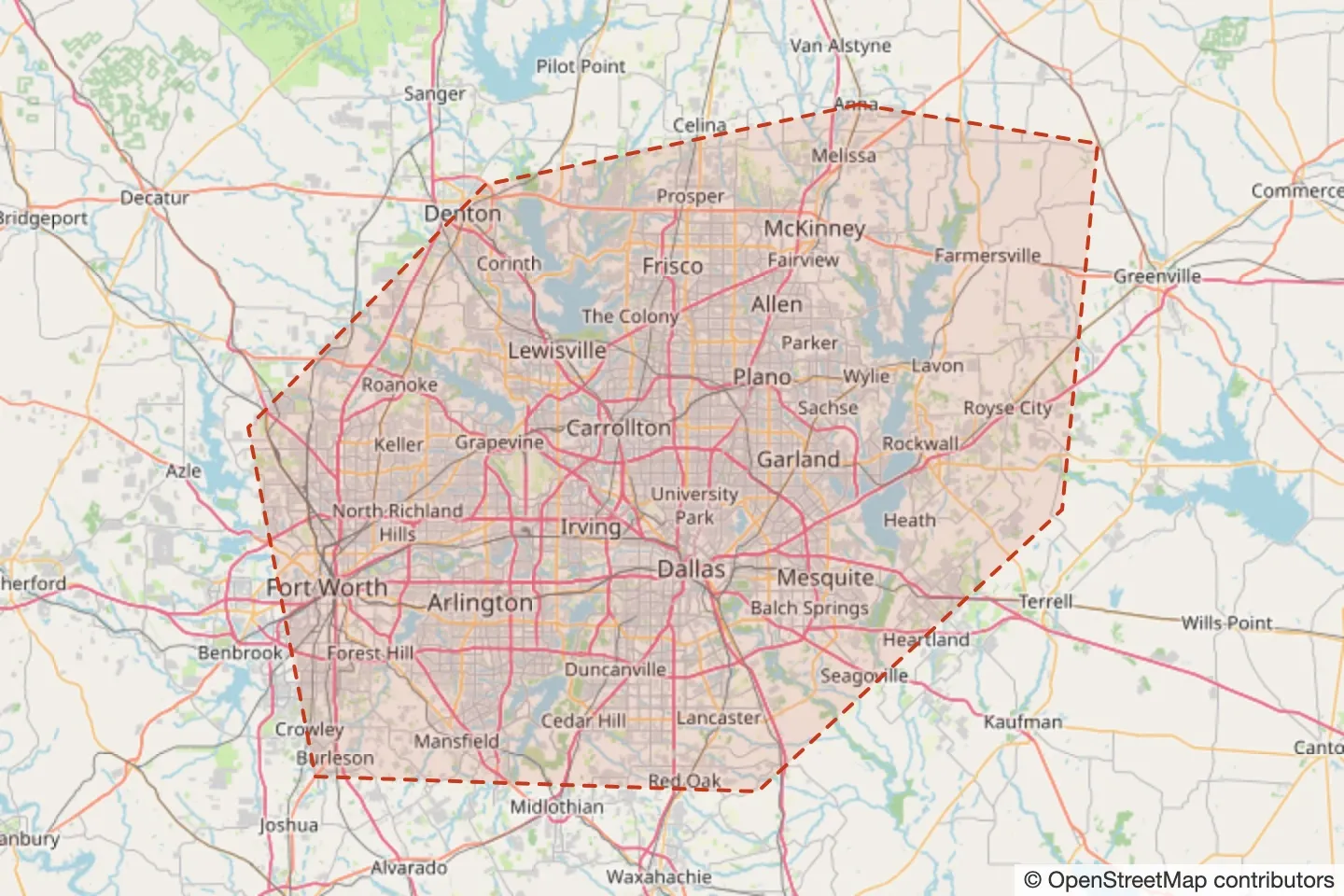
Our Plano crews also cover Frisco, Allen, Richardson, Murphy, Carrollton. If your property sits between two of these, call and we will tell you straight whether we can reach you.
Get Burst Pipe Cleanup in Plano, TX
If a pipe has burst in your Plano property, do not wait to see how far it spreads. We extract, dry, and document the loss while you arrange the plumbing repair, with a free on-site estimate — and we also cover Frisco, Allen, Richardson.