Hardwood Floor Water Damage Restoration in Garland, TX
Hardwood reacts to water faster than almost any other flooring, and it does it visibly — cupping, gapping, and discoloration can show up within a day of a leak, overflow, or flood in a Garland property. We provide hardwood floor water damage restoration for wood flooring affected by burst pipes, appliance leaks, bathroom overflows, flooding, and slab moisture, starting with an inspection of the wood and the subfloor underneath it before we talk about drying or removal.
Wood floors are also one of the few materials that sometimes genuinely can be saved with fast, controlled drying, which is exactly why speed and the right equipment matter more here than on most other flooring types. What decides whether a floor is a drying candidate or a replacement is never how it looks on day one — it is the water category, how long the boards sat wet, and above all what the subfloor underneath is doing.
Signs Water Has Damaged Wood Flooring
Engineered and laminate flooring behave differently from solid hardwood, which is worth flagging up front. Engineered wood and laminate rarely survive a real soaking because their core layers swell and delaminate, while solid hardwood sometimes recovers if it is dried slowly and carefully. Knowing which type is in a Garland property changes the conversation from the first visit.
Cupping — where the edges of each board rise higher than the center — is usually the first visible sign, and it means the underside of the board is wetter than the top. Left long enough, boards can crown, where the center rises instead, or buckle and lift away from the subfloor entirely. Darkening or graying of the wood, a musty smell, and gaps that appear between boards once the wood dries unevenly are all signs worth acting on quickly rather than waiting to see if a floor settles back down on its own.
Extraction, Drying, and Moisture Monitoring
Standing water comes off the surface first — hardwood should never sit under standing water any longer than it takes to extract it. From there we take moisture readings from the wood itself and from the subfloor beneath it, since the subfloor holds moisture longer than the wood on top of it and drives whether the floor can be saved at all.
Structural drying covers the broader process where drying in place is realistic: equipment built to pull moisture out through the surface of the wood without over-drying it, combined with dehumidification. Readings are taken daily and compared against a dry baseline from unaffected flooring elsewhere in the Garland property, and drying continues until that target is reached rather than until the floor looks or feels dry.
Nail-down hardwood over a wood subfloor and floating engineered flooring over a slab dry very differently, and we treat them differently. A nail-down floor with a wood subfloor beneath it can sometimes be dried from both sides at once — air moved across the surface and, where access allows, pulled through the subfloor from below. A floor glued or floating directly over a slab has no space underneath to dry into, so drying depends entirely on pulling moisture out through the wood itself, which takes longer and has a lower ceiling on what can realistically be saved.
Finish type matters here too. A polyurethane or oil finish that is still sealing the wood surface slows how fast moisture can escape upward, which is actually useful during extraction — it buys a little time — but works against us once drying starts, since the same seal that kept water out now keeps it in. We factor the finish into how aggressively we can dry a Garland floor without forcing moisture out faster than the wood can safely release it.
Cupping, Crowning, Buckling, and Subfloor Concerns
Not every cupped floor is a lost floor. Mild cupping caught early, with fast extraction and controlled drying, sometimes flattens back out on its own as the wood reaches equilibrium moisture again. Buckling is a different story — once boards have physically lifted and separated from the subfloor, that mechanical damage does not reverse with drying, whatever happens to the moisture level afterward.
Crowning deserves a specific warning of its own: it is often caused by drying too aggressively rather than by the original water event, when the top of a board dries out faster than the bottom can release its moisture. That is one reason we monitor and adjust equipment daily instead of running it at maximum and leaving it unattended.
The subfloor underneath matters as much as the visible wood on top. Moisture mapping readings taken through the flooring tell us whether the subfloor itself is saturated, which affects both the drying plan and whether flooring has to come up to reach it directly.
When Floors Can Be Saved Versus Replaced
What decides it is the combination of how long the floor was wet, what kind of water it was, how saturated the subfloor is, and how the wood is holding up structurally — not how the floor looks on the surface after a day. We take moisture readings before making that call, and we tell you plainly when a floor is a strong candidate for drying versus when replacement is the more realistic outcome, rather than promising a save we cannot back up.
Slab moisture is worth a specific mention here, since most Garland homes are built on a slab rather than a raised foundation. The clay-heavy soils common across North Texas expand and contract with moisture more than most soil types, and over time that movement can stress a slab and open hairline cracks that let ground moisture wick up through the concrete and into the flooring above it. Persistent moisture coming up through a slab is a different problem than a one-time leak — it shows up as a recurring issue in the same spot rather than a single event, and needs its own investigation rather than being treated as a standard drying job.
Insurance Documentation and Repair Planning
We photograph the affected flooring, log moisture readings from both the wood and the subfloor, and record what was dried versus what was removed and why. That documentation is what most Garland customers bring to their insurer; whether the loss is covered and what is paid toward it is a decision between you and your carrier — we document thoroughly and do not promise a claim outcome.
If flooring has to be replaced, we can coordinate that through our flooring installation team once drying is complete and the scope is set, so the same job does not require a separate contractor search.
Also Serving Areas Near Garland
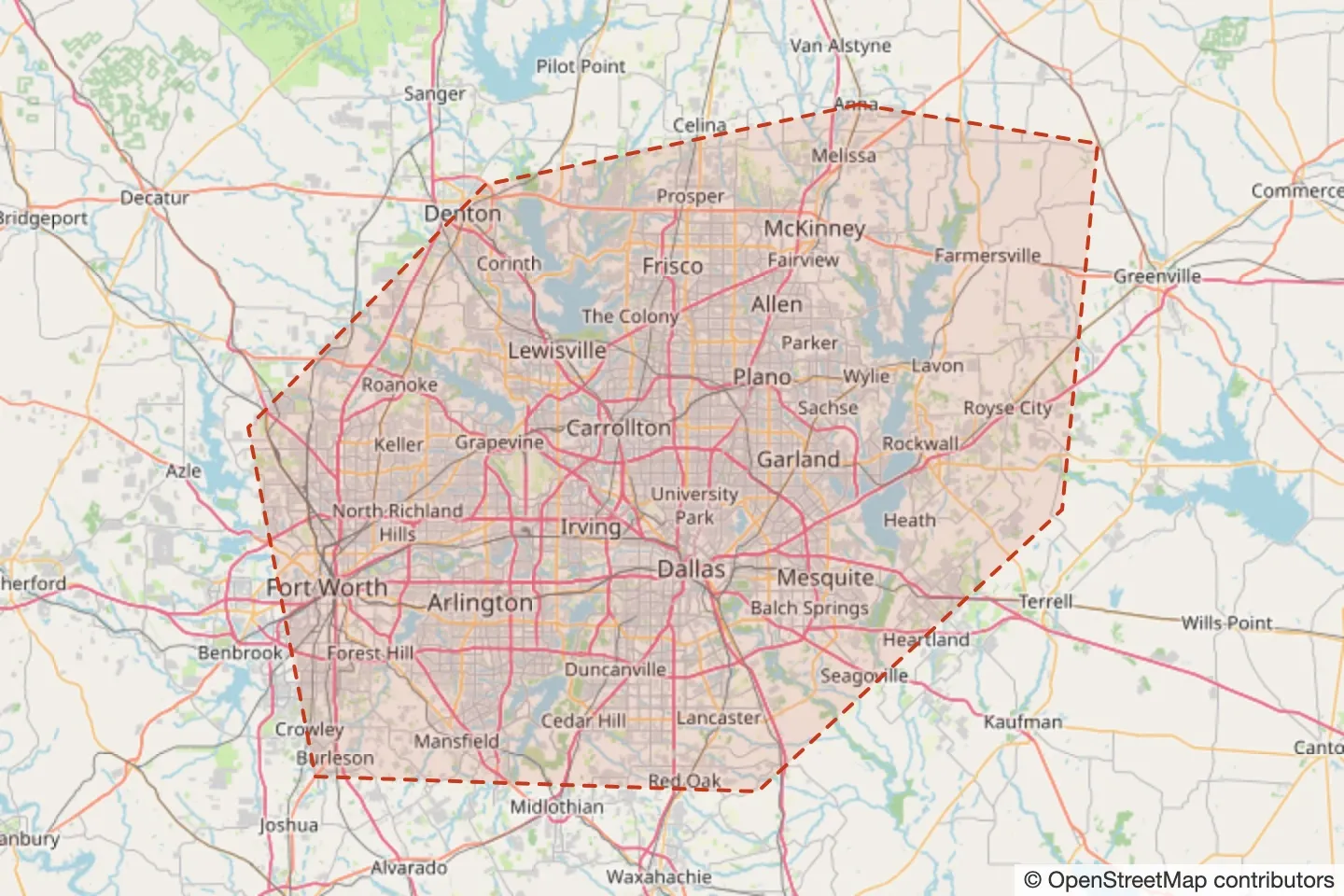
Our Garland crews also cover Rowlett, Richardson, Sachse, Mesquite. If your property sits between two of these, call and we will tell you straight whether we can reach you.
Get Hardwood Floor Water Damage in Garland, TX
If hardwood in your Garland property is wet or starting to cup, speed matters more than with most flooring. We measure the wood and the subfloor, dry what is realistic to save, and give you a straight answer on drying versus replacement. The on-site estimate is free, and we also cover Rowlett, Richardson, Sachse.