Dishwasher Leak Cleanup and Drying in Garland, TX
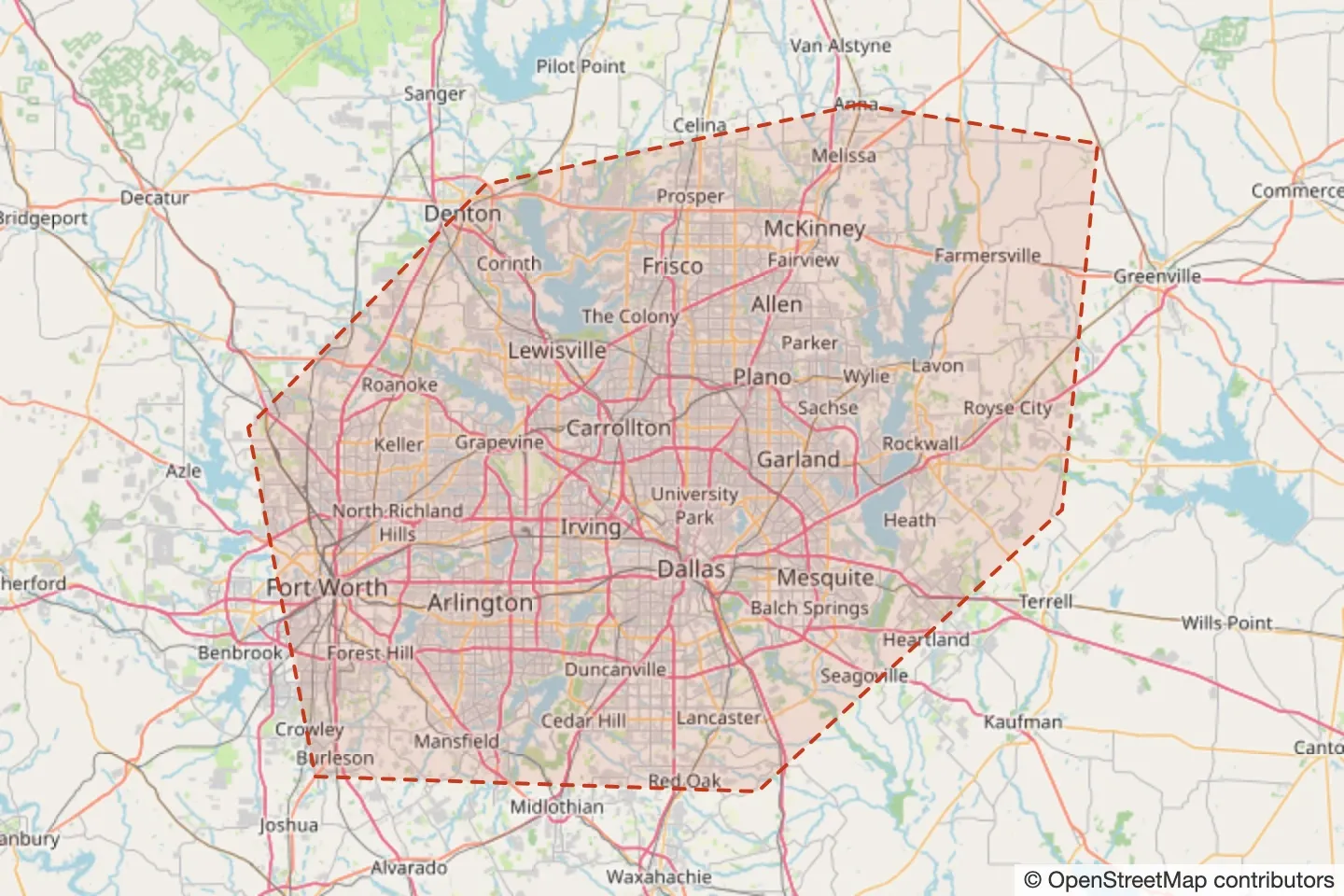
A dishwasher leak usually comes from one of four places: a worn door gasket that weeps a little water with every cycle, a supply line fitting under the sink that has loosened or cracked, a drain hose that backs up, or a float switch that fails to shut the water off when it should. Because the unit runs on a cycle rather than sitting idle like a refrigerator, a failure here tends to show up faster — water on the kitchen floor after a wash cycle rather than a slow drip discovered weeks later. Eastern Collin, Dallas and Rockwall counties sit on a straight run from our McKinney base, so this is an area we reach quickly. We check moisture in the flooring, cabinet base, and subfloor with a meter before deciding what needs to come out and what can be dried in place.
If you have already found water on the floor after a cycle, or the cabinet next to the dishwasher in your Garland kitchen feels soft or swollen, call us rather than waiting to see if it dries. Water from a dishwasher failure travels sideways along the floor and into the cabinets on both sides of the unit, not just the one directly below it, and the on-site inspection to check that is free.
What to Do Right Away
If it is safe, shut off the water supply line under the sink and switch the breaker off to the dishwasher rather than reaching around a wet appliance. Do not run another cycle until the source of the leak has been identified — a gasket or float switch that failed once is likely to fail again the moment water is introduced. Stay off flooring that feels soft, since a subfloor that has been absorbing water can lose strength before it visibly sags.
Photograph the water, the cabinet base, and the dishwasher area before wiping anything up or moving the appliance — that record matters for your own file or a conversation with your insurance carrier. Leave cabinet panels and flooring in place rather than tearing into them yourself; call us for an inspection and we will tell you plainly what has to come out versus what can be dried.
If the sink has a garbage disposal, check whether the dishwasher drain line connects through it — a missing high loop or a clogged air gap on the counter is a common backup point that gets overlooked because it is under the sink rather than under the dishwasher itself. Do not assume the leak is finished just because the floor looks dry; a partial clog can let water seep out slowly for hours after the cycle that caused it.
How Our Dishwasher Leak Cleanup Process Works
We check the dishwasher cavity, the cabinets on both sides, the flooring transition strips, and the wall behind the unit with a moisture meter rather than a visual look alone. Where standing water is present, we extract it first; where materials cannot be dried in place — a swollen cabinet panel or flooring that has cupped at the seams — we remove them in a controlled way rather than drying over trapped moisture.
The wall and floor directly behind and under the dishwasher are the hardest area to dry without pulling the unit, and also the area most likely to hold moisture the longest. We set air movers and a dehumidifier to pull moisture from the cabinet cavities and verify with a meter before calling the area dry, and everything gets logged with photos and readings along the way. See water extraction and structural drying for more on how those two steps work.
We also pull the kickplate at the base of the dishwasher and check the cabinet under the sink, since both are common places for water to collect out of sight. A drain hose that has backed up or come loose at its connection can put more water into the cabinet below the sink than into the kitchen itself, which is easy to miss if the inspection stops at the visible flooring.
Common Damage Areas and Warning Signs
Cabinet bases under and beside a dishwasher are typically particleboard or MDF, and both absorb water quickly and swell permanently once they do — they do not dry back to their original shape the way solid wood might. Wherever a leak has been running for more than a day or two, we check the flooring, the underlayment beneath it, and the toe kick and side panels on the cabinets next to the dishwasher, not just the one directly below it, since water tracks sideways along a slab floor rather than staying under the appliance.
Laminate and engineered wood flooring will often cup or lift at the seams closest to the dishwasher well before the rest of the kitchen shows any sign of a problem, which is often how a leak that has been running for a while finally gets noticed. If we find visible growth during an inspection, we will point you to our mold remediation team rather than clean over it — moisture trapped in a cabinet cavity for more than a day or two is enough for that to start.
The cabinet under the sink deserves its own look, separate from the dishwasher cabinet, because a slow leak at the disposal connection or the air gap fitting on the counter can run for weeks along the cabinet floor without anyone opening the door to check. We treat that cabinet as part of the same inspection rather than a separate issue, since the water inside it usually traces back to the same event.
Cleanup, Drying, and Repair Coordination
Our work is the water damage cleanup and drying that follows a dishwasher failure — inspection, extraction, structural drying, sanitizing, and documentation. We do not repair the dishwasher itself; a worn gasket, a bad float switch, or a cracked fitting is appliance repair or plumbing work, and we are glad to point you toward someone for that once the leak source is clear.
When a cabinet panel or section of flooring has to be replaced rather than dried, that is separate from the water cleanup. Our kitchen remodeling and flooring installation teams pick that up once the space is confirmed dry, so the repair and the drying do not become two disconnected projects.
We document everything with photos and moisture readings as we go, which gives you a written record to hand your insurance carrier or keep for your own file. What that documentation is worth to a claim, and whether a repair or replacement gets covered, is a decision for your carrier to make, not us.
Related Water Damage Services
A dishwasher leak sometimes overlaps with services that deserve their own look: water extraction when a leak has put standing water on the kitchen floor rather than just dampness behind the appliance, structural drying for moisture that has worked into subfloor, cabinets, or walls after a longer-running leak, and moisture mapping for documented readings showing an area was actually verified dry.
If kitchen items or cabinet contents need to move out while drying equipment runs, see contents cleaning and storage. And if the dishwasher leak is one part of a larger water event, water mitigation covers the wider emergency response. For everything we handle under this cluster, see water damage restoration.
Also Serving Areas Near Garland
Our Garland crews also cover Rowlett, Richardson, Sachse, Mesquite. If your property sits between two of these, call and we will tell you straight whether we can reach you.
Get Dishwasher Leak Cleanup in Garland, TX
If your dishwasher has leaked once, is leaking now, or you have found soft flooring or a swollen cabinet panel nearby in Garland, call us. We will check how far the water actually traveled and tell you plainly what can be dried versus what has to come out. The on-site estimate is free, and we also cover Rowlett, Richardson, Sachse.