How Mold Testing Works in University Park
Testing is a tool, not a starting point. In most University Park cases, where growth is visible and the moisture source is obvious, a lab result mostly confirms what anyone can already see. Testing earns its place in narrower situations: a musty smell with nothing visible, a real estate transaction that needs an independent record, a job large enough to need a formal remediation protocol, or a landlord and tenant who need a neutral answer instead of two competing opinions. We will tell you plainly which situation you are in.
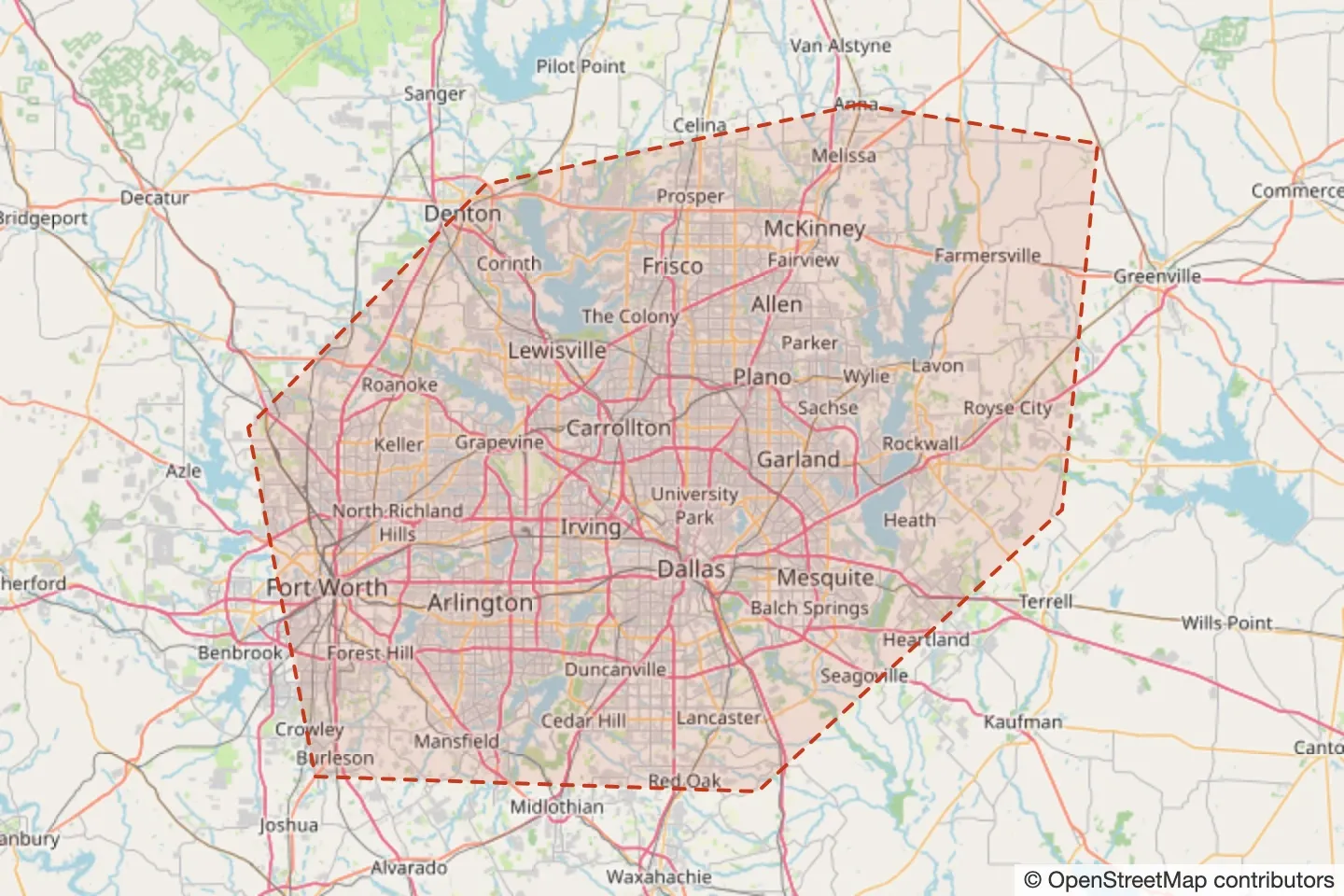
We dispatch from McKinney down through the central corridor. Response depends on the time of day and what we have running, and we will tell you honestly on the phone what to expect. We are a remediation company, and Texas mold rules do not allow the same company to assess a mold problem and remediate it on the same project. Assessment covers the sampling, the remediation protocol, and the clearance testing afterward, so all of that is done by an independent, licensed mold assessment consultant. We do not collect samples or clearance-test our own work; we carry out the remediation to the protocol the assessor writes.
When Mold Testing Makes Sense
A real estate transaction is one of the more common reasons testing comes up in University Park. Buyers, sellers, and agents often want an independent, lab-documented answer before a sale closes, rather than relying on someone's visual opinion of a stain or a smell near a closing date. The same logic applies to landlord and tenant situations — a documented result from an independent assessor carries more weight in a dispute than two people disagreeing about what they can see or smell. Clearance is the other common reason: after remediation, the assessor confirms the work area passed before it is closed back up or repaired.
Testing also fits a musty smell with no visible growth and an unclear moisture history, since a sample can sometimes point toward or away from an area worth opening up further. What it is not well suited for is replacing a look at the problem where growth is visible and the cause is obvious — in that case, sampling adds cost without adding much information, and we would rather tell you that up front.
Mold Testing Methods
The assessor chooses the method based on the specific question being asked. Here is a plain guide to what each one does, so you know what to expect — and once there is a report, we are glad to talk through what it means for the cleanup.
Air Sampling
Air sampling captures spore counts at a single point in time, almost always compared against a sample taken outside the building at the same time. It is the method used most often when the concern is airborne exposure without any visible growth to point to.
Surface Sampling
Surface sampling — a tape lift or a swab — confirms whether growth is present on a specific material. It answers a targeted question about one spot rather than giving a general reading of the whole property.
Bulk and Material Sampling
Bulk sampling sends a physical piece of material, such as a section of drywall or insulation, out to the lab when the material itself needs to be assessed rather than just its surface.
Post-Remediation Clearance
After removal and cleaning, the independent assessor returns to confirm the work area passes before it gets closed back up or repaired. In Texas that clearance comes from the assessor, not the remediation company, so on our jobs we never test our own work.
Mold Testing vs. Mold Inspection
An inspection is a visual and moisture-based look at the problem — what is growing, where the moisture is, and what is causing it. Testing adds a lab-confirmed sample on top of that, collected by an independent licensed assessor. Most of the time, an inspection on its own answers the practical question; see mold inspection for what that visit covers and how it differs from sampling.
Visible growth with a clear moisture source generally needs source correction and a remediation plan regardless of what a sample says, since the inspection has already answered the practical question. A test result does not change what has to happen to a wet wall — it mainly adds documentation for situations where documentation is the actual point, like a sale or a dispute.
What Happens If Mold Test Results Are Elevated
There is no accepted standard for what counts as a "safe" indoor mold level, so results get interpreted by comparison — typically an indoor spore count against an outdoor baseline — rather than measured against a fixed number. An elevated result is a starting point for finding the moisture source, not a diagnosis of anything, and it is not something we are positioned to interpret medically. A health question belongs with a doctor, not a lab report or a restoration company.
Once a source is identified, the next step is scoping the cleanup: containment where material has to come out, cleaning where surfaces can be treated, and drying the affected area to a measured target. See mold remediation for how the correction and removal side of the work is handled. Where the job needs clearance afterward, it comes from the independent assessor, not from us.
Also Serving Areas Near University Park
Our University Park crews also cover Highland Park, Richardson. If your property sits between two of these, call and we will tell you straight whether we can reach you.
Get Mold Testing in University Park, TX
If you are trying to decide between an inspection, testing, and remediation for an University Park property, talk to us before spending money in the wrong direction. We would rather tell you testing is not necessary than send you off to pay for it, and the same goes the other way if an independent assessment is genuinely the right next step. We also serve Highland Park, Richardson.