Fire Damage Restoration Help in Southlake, TX
After a fire, a Southlake property can be left with smoke residue, soot, debris, odor, water from firefighting, and openings that are no longer secure. We provide fire damage restoration in Southlake, TX to move a property from that first assessment through cleanup, smoke and soot restoration, odor treatment, documentation, and repairs. Once the property is safe to enter, we inspect the damage, explain plainly what comes next, and get to work.
Call once the fire department has cleared the property for entry. We will not tell you it is safe to go back inside — that decision belongs to the fire service and, where the structure itself is in question, to a structural engineer. What we can do is meet you there as soon as it is cleared and give you a straight assessment of what is recoverable rather than a guess made from the curb.
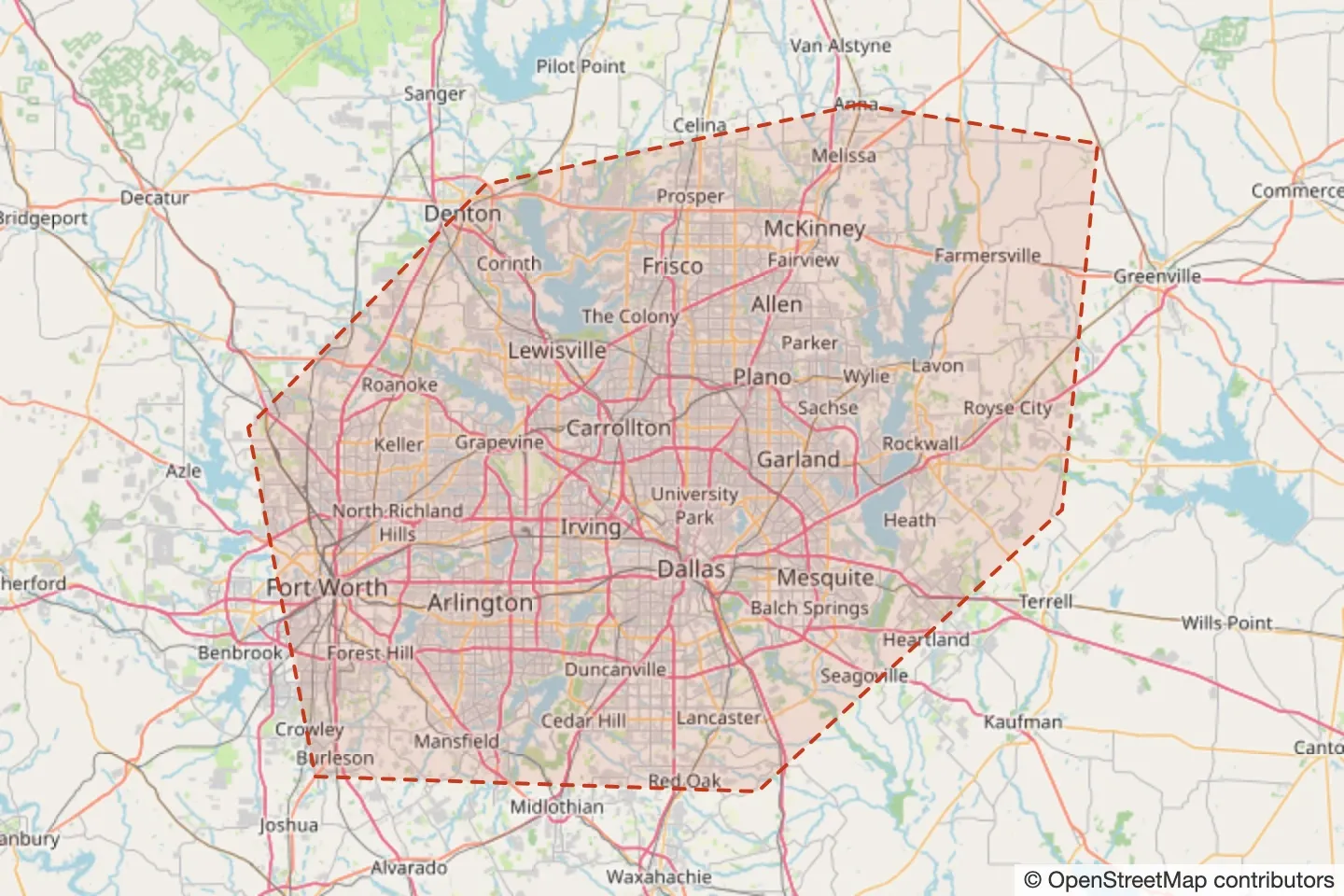
This is the western side of our coverage area. We serve it fully, and we will give you a realistic arrival window on the call rather than an optimistic one. Most of the fires we respond to are not total losses. Kitchen fires, electrical faults, appliance failures, and garage fires are the common calls, and in each of them the structure often survives while the smoke damage reaches far past the room where the fire started. The assessment that matters most is not how bad the burn looks — it is how far the smoke traveled, what it settled on, and how much water went in putting it out.
What Fire Damage Restoration Includes
A fire loss is rarely just fire. Most of what we deal with at a Southlake property is what the fire left behind — smoke that traveled well beyond the room it started in, soot that etches surfaces the longer it sits, and water that soaked the structure while the fire was being put out. Treating those three problems separately, on separate timelines, is how a recoverable property ends up costing more than it needed to.
The order of the work matters as much as the work itself. Cleaning soot off a surface that is still wet drives the residue in deeper rather than lifting it off. Drying a structure before contaminated material is removed just circulates soot back through it. Fire restoration is a sequence, not a checklist done in any order, and getting the sequence wrong costs materials that could otherwise have been saved.
The work itself covers a damage assessment once the property is cleared for entry, removal of fire debris and unsalvageable material, smoke and soot cleaning across every room it reached, odor evaluation and treatment at the source, drying of the water left behind by firefighting, a contents inventory with honest guidance on what can reasonably be cleaned, documentation for your insurance communication, and repairs once cleaning is verified complete.
Fire Damage Cleanup and Debris Removal
Cleanup starts with getting damaged material out of a Southlake property and protecting what is still sound. Ash and charred debris come out, unsalvageable materials are removed, and unaffected rooms get sealed off so soot is not tracked through the rest of the structure while work is underway.
Timing carries a real cost here. Soot is acidic, and the longer it sits on a surface, the further it etches into it. Within days it can permanently stain grout, discolor metal fixtures, pit chrome and aluminum, and yellow paintwork that would have cleaned up fine in the first seventy-two hours. That is the main reason we push to start cleanup as soon as a property is cleared, rather than waiting for a claim to be settled first — the damage keeps progressing while everyone waits on paperwork.
Before anyone touches anything, a few things are worth knowing. Do not wipe soot with a dry cloth — it is an oily residue, and dry-wiping grinds it further into paint, drywall, and grout instead of lifting it off. Do not run the HVAC system: doing so pulls smoke-laden air through the return and pushes it back out through every supply register, distributing soot through the ductwork into rooms that were never affected. And do not eat food that was exposed to smoke — it penetrates packaging, and anything porous or opened in the affected area should be discarded rather than risked.
There is also a decision to make early about what leaves the property. Charred structural material, saturated insulation, and heavily sooted porous contents generally do not come back, and holding onto them slows drying and keeps releasing odor into rooms that are otherwise clean. Everything removed from a Southlake property is photographed and inventoried first, so nothing disappears without a record of what it was and why it went.
Smoke Damage Restoration and Soot Cleaning
Smoke and soot are usually the largest part of a fire loss, and they are also the part most likely to be made worse by a well-meaning first move in the hour after a fire.
Smoke Residue on Walls, Ceilings, and Contents
Smoke moves with the air in a structure, which means it goes wherever the air goes — up stairwells, along ceilings, into closets and cabinets, and through the gap around a closed door into rooms the fire itself never reached. Soot settles on every surface it passes and behaves differently depending on what burned. A protein fire from cooking leaves a thin, sharp-smelling film that is nearly invisible until it is disturbed and smears when wiped. A fire involving synthetic materials — carpet, upholstery foam, plastics — leaves a dense, black residue that reacts the same way under a dry cloth.
The right cleaning method depends on the residue and the material underneath it, which is why assessment matters more than scrubbing. See smoke damage restoration for how that cleaning stage and the material-by-material decisions work.
Odor, Airflow, and Cross-Contamination
Smoke odor is not a surface problem. It lives in porous material — textiles, insulation, cabinet interiors, carpet pad — and keeps releasing long after the visible residue is gone. Odor treatment starts with removing the source, because sealing or masking over contaminated material only delays the smell coming back.
Where an HVAC system ran during or after the fire, it needs evaluating before it runs again — running it spreads soot and odor through ductwork into rooms of a Southlake property that were otherwise clean. We flag that condition and coordinate rather than claim duct work we do not perform in-house.
Contents get sorted rather than blanket-discarded. Hard, non-porous items — glass, ceramics, sealed metal, most kitchenware — usually clean up well. Soft and porous items are the harder call: upholstery, mattresses, textiles, and anything with foam hold odor in a way surface cleaning does not reach. We tell a Southlake homeowner which is which with the item in front of us, not from a list written up afterward.
Water Damage From Firefighting
Putting a fire out puts a large volume of water into a Southlake structure in a short time. It soaks flooring, runs down inside wall cavities, saturates insulation, and collects under cabinets — and because it has passed through fire debris on the way down, it is treated as contaminated rather than clean.
Left alone, that water causes a second loss on top of the first. Drying has to run alongside the soot cleaning, not after it, or the two losses compound each other. Our water damage restoration process covers the extraction, structural drying, and moisture verification, and the same crew handles both halves of the job rather than passing it between two contractors.
Fire Restoration Process: From Inspection to Repairs
The work follows a set order for the same reason cleanup does — doing any step early costs more than it saves. Here is how a typical Southlake fire loss moves from the first walk-through to the last coat of paint.
Damage Assessment and Safety Review
Once a Southlake property is cleared, we document the visible damage, trace how far smoke migrated, check for firefighting water, and note structural concerns. Nothing gets moved before it is photographed.
Stabilization and Cleanup
Containment goes up so unaffected areas stay that way. Debris and unsalvageable material come out, and water mitigation starts immediately rather than waiting on the cleaning crew to finish first.
Smoke, Soot, and Odor Treatment
Surfaces are cleaned by a method matched to the residue and the material underneath it. Contents are sorted into cleanable and non-cleanable, and odor is treated at the source rather than masked over it. See smoke damage restoration.
Repair and Rebuild
Drywall, flooring, cabinetry, and paint go back into a Southlake property once cleaning is verified complete. The crew that cleaned it is the crew that rebuilds it. See remodeling and rebuild.
Residential and Commercial Fire Damage Restoration in Southlake, TX
Homes, Apartments, Condos, and Rental Properties
We work with Southlake homeowners, landlords, property managers, and tenants. In multi-unit buildings, smoke rarely respects the unit boundary — it travels through shared walls, ceiling assemblies, and stairwells — so the assessment covers neighboring units rather than only the one that burned.
For rental property, the practical question is usually habitability and how quickly a unit can be turned around. We document conditions clearly enough that owner, tenant, and adjuster are all working from the same record, which removes most of the argument about what was damaged and what was already worn before the fire.
Commercial Buildings and Businesses
Offices, retail, restaurants, and warehouses across Southlake. A commercial fire loss is usually a continuity problem as much as a cleaning one — which areas can reopen, how the work zone is contained from the trading floor, and what documentation the owner and their insurer both need. Restaurant fires in particular tend to be protein-heavy, which changes the cleaning approach considerably from a typical residential job.
Commercial work also carries stock and equipment questions a residential job does not. Inventory exposed to smoke usually cannot be sold even where it looks undamaged, and that determination needs recording at the property rather than argued about later. Where a Southlake business can keep part of the building trading, we phase the work and seal the active zone so customers and staff are not walking through it.
Insurance Documentation for Fire Damage Restoration
We document the affected rooms, smoke migration, soot conditions, and moisture from firefighting at a Southlake property, with photographs taken before anything is moved, and a contents inventory where items are being removed for cleaning or disposal.
Fire claims tend to be documentation-heavy in a way water claims usually are not, because a fire loss almost always spans three categories at once — structure, contents, and additional living expense while the property is uninhabitable. Each is assessed differently, and a record that blurs them together is harder for everyone to work from.
Contents are usually where disputes start on a fire claim. An itemized record made at the property, before anything is removed, is worth considerably more than a list reconstructed from memory weeks later. What we cannot do is tell you what your policy covers or what your carrier will pay — those decisions are theirs, and any restoration company promising otherwise is guessing.
Also Serving Areas Near Southlake
Our Southlake crews also cover Grapevine, Colleyville, Keller, Trophy Club. If your property sits between two of these, call and we will tell you straight whether we can reach you.
Get Fire Damage Restoration in Southlake, TX
If a Southlake property has fire, smoke, soot, odor, or firefighting water damage, we can inspect the affected areas, begin cleanup, treat the smoke and odor, dry the structure, document the loss, and carry the work through to repairs. Our technicians are IICRC certified, on-site estimates are free, and one crew handles the whole job. We also cover Grapevine, Colleyville, Keller.