24/7 Water Removal and Extraction in Grand Prairie, TX
Water sitting on a floor is doing the least damage it will ever do. Every hour it stays there, more of it works down into subfloor, along baseboards, and up into drywall through capillary action — which is why water extraction always comes first, before drying equipment goes in and before anyone can tell you honestly what is salvageable.
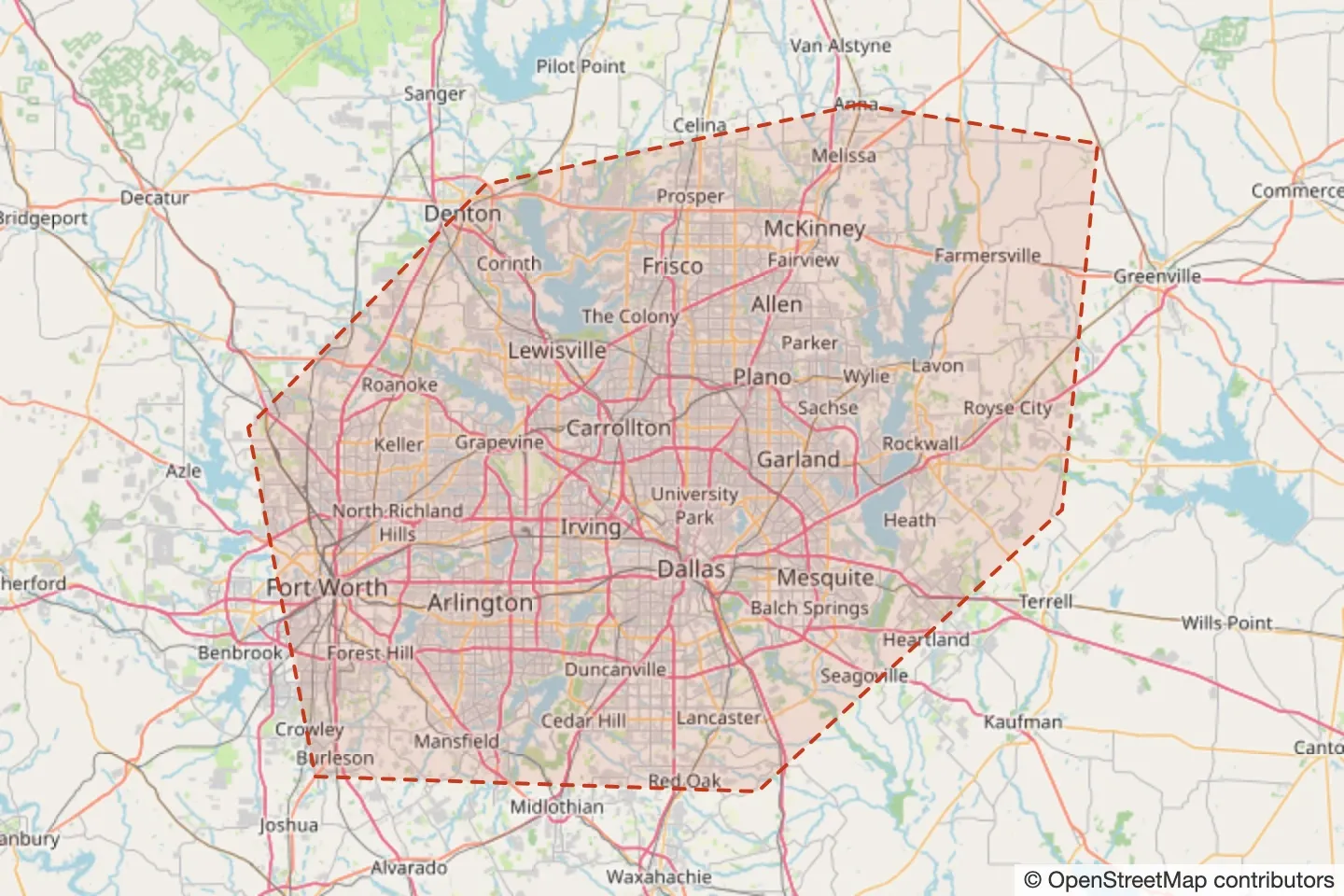
This is the western side of our coverage area. We serve it fully, and we will give you a realistic arrival window on the call rather than an optimistic one. We treat water extraction and the water removal that follows it as one connected job, with the same crew from the first call through the final moisture reading, and the on-site estimate is free.
When Standing Water Needs Professional Extraction
Not every spill needs a truck pulled to the curb. A small puddle from a dropped glass, or an overflow caught within minutes, can usually be handled with towels and a shop vac. Professional water extraction becomes the right call once water has been sitting long enough to spread — under baseboards, into carpet pad, across more than a room's worth of flooring — or once it came from a source that raises other concerns, such as a supply line, an appliance, or a drain.
Volume matters less than what the water has touched and how long it has been there. A half-inch of standing water across an entire kitchen floor for two hours is a bigger job than an inch of water in a small closet caught right away, because the kitchen loss has had time to travel into cabinet toe-kicks and wall cavities. If flooring feels soft underfoot, baseboards have started to swell, or water reached an outlet or appliance, that is when emergency water removal stops being a mop-and-towels job. For a loss with safety concerns or one that reaches multiple rooms, see water mitigation for how the fuller response is sequenced.
In a multi-family building, standing water rarely stays contained to one unit for long. A slow leak on an upper floor can travel through a shared wall cavity or a subfloor seam and show up as a stain on the ceiling of the unit below before anyone upstairs even notices a puddle. That is one more reason we treat a small leak in an apartment or duplex with the same urgency as a larger one in a single-family home — the water does not know where one unit's property line ends and the next one starts.
Extraction Equipment and First-Response Steps
The choice between truck-mount and portable extraction comes down to access and volume. A truck-mount pulls a stronger, continuous vacuum and is the right call for a large loss with exterior access nearby. Portable units trade some of that pulling power for reach, which matters on a second floor, in an apartment, or in an interior room a hose from the driveway cannot get to.
On carpet we run a weighted wand in overlapping passes so it presses down through the pile and pad rather than skimming the surface — one pass rarely gets everything the pad is holding. Hard flooring gets squeegee tools that push standing water to a collection point instead. Once the bulk of it is out, we take moisture readings in flooring, baseboards, and subfloor to see what is actually wet versus what only looks wet, which is what shapes the structural drying plan that follows.
Before extraction starts, we also check for electrical hazards. An outlet or a baseboard heater sitting in standing water gets treated as live until it is confirmed otherwise, and a technician will not wade into a room until power to that area has been cut at the breaker. That check adds only a few minutes to the visit, but skipping it is how equipment gets damaged or a technician gets hurt.
What Happens After Water Removal
Every gallon we remove mechanically is a gallon dehumidifiers do not have to pull out of the air over the days that follow, so we push to get as much out physically as we can before switching to air movers and dehumidifiers. Equipment gets placed to a plan based on the readings we took, not dropped in the middle of the room and left there.
Materials that cannot reasonably be saved — soaked pad, delaminating particleboard — come out during this stage rather than being dried and reassessed later. We photograph and log what is removed and why, so there is a record of the decision, not just the outcome. For a loss large enough to involve exterior water or a source we have not confirmed is clean, our flood damage restoration process covers the added contamination screening a single-source leak does not need.
Common Sources of Extracted Water
Most of the water extraction calls we run trace back to a handful of causes: a supply line or water heater that fails, a washing machine or dishwasher hose that lets go, a toilet that overflows, or — in winter — a pipe that freezes and splits during a hard freeze and floods the room once it thaws. Each of those starts as clean, or reasonably clean, water, which changes how quickly it can be treated and what can be dried in place rather than removed.
Not every water removal company treats every source the same way, and neither do we. A supply-line break is one thing; a sewage backup is another, and it calls for different handling because of contamination risk rather than volume — see sewage cleanup for how that gets handled instead of standard extraction alone.
A slab leak is its own category, and one that shows up more in this part of Texas than in most places. The expansive clay soils under North Texas foundations swell and shrink with the seasons, which stresses supply lines running through and under the slab, and a slab leak can run for weeks before it surfaces as a warm spot on the floor or an unexplained jump in the water bill. By the time it is visible, the water has usually already traveled well past the spot where it eventually shows up.
Residential and Commercial Extraction
A house and a commercial building create different extraction problems even when the water volume looks similar. In a home, the priority is usually getting a family back into a functioning kitchen, bathroom, or bedroom. In an office, retail space, or warehouse, the water often travels farther before anyone notices, spreads across an open floor plan, and can sit above suspended ceiling tiles where it is not visible from the floor at all.
Commercial jobs also tend to run on a different clock. A business needs its space back to keep operating, which can mean scheduling extraction around business hours, coordinating with tenants in a shared building, or bringing enough truck-mount and portable capacity to clear a larger footprint in one visit instead of several. Whether it is a single bathroom or a multi-suite building, the water extraction services we provide start from the same first question: how far has this actually traveled. Our full water damage restoration process picks up from there once the standing water is gone.
Furniture, boxes of files, and low-set contents usually need to move before extraction can be thorough — wicking water up into fabric and cardboard the same way it wicks up drywall. In a home that might mean a few pieces of furniture; in an office or warehouse it can mean pallets or filing cabinets, which is often the biggest factor in how long the extraction visit actually takes.
Also Serving Areas Near Grand Prairie
Our Grand Prairie crews also cover Irving, Arlington, Mansfield, Cedar Hill. If your property sits between two of these, call and we will tell you straight whether we can reach you.
Get Emergency Water Removal in Grand Prairie, TX
If water is standing in a Grand Prairie home or business, do not wait to see whether it dries on its own. We will get equipment on site, pull the water, check what is underneath it, and tell you plainly what comes next. Free on-site estimate, and we also reach Irving, Arlington, Mansfield.