Professional Mold Removal for Visible Mold Problems in Grand Prairie
If you can see mold on a wall, ceiling, floor, piece of trim, or any other building material in a Grand Prairie property, it should be dealt with before it spreads or comes back. Our mold removal team identifies the affected area, removes mold from the surfaces that can be salvaged, takes out material that cannot be reliably cleaned, and connects the cleanup to whatever moisture problem let it start in the first place.
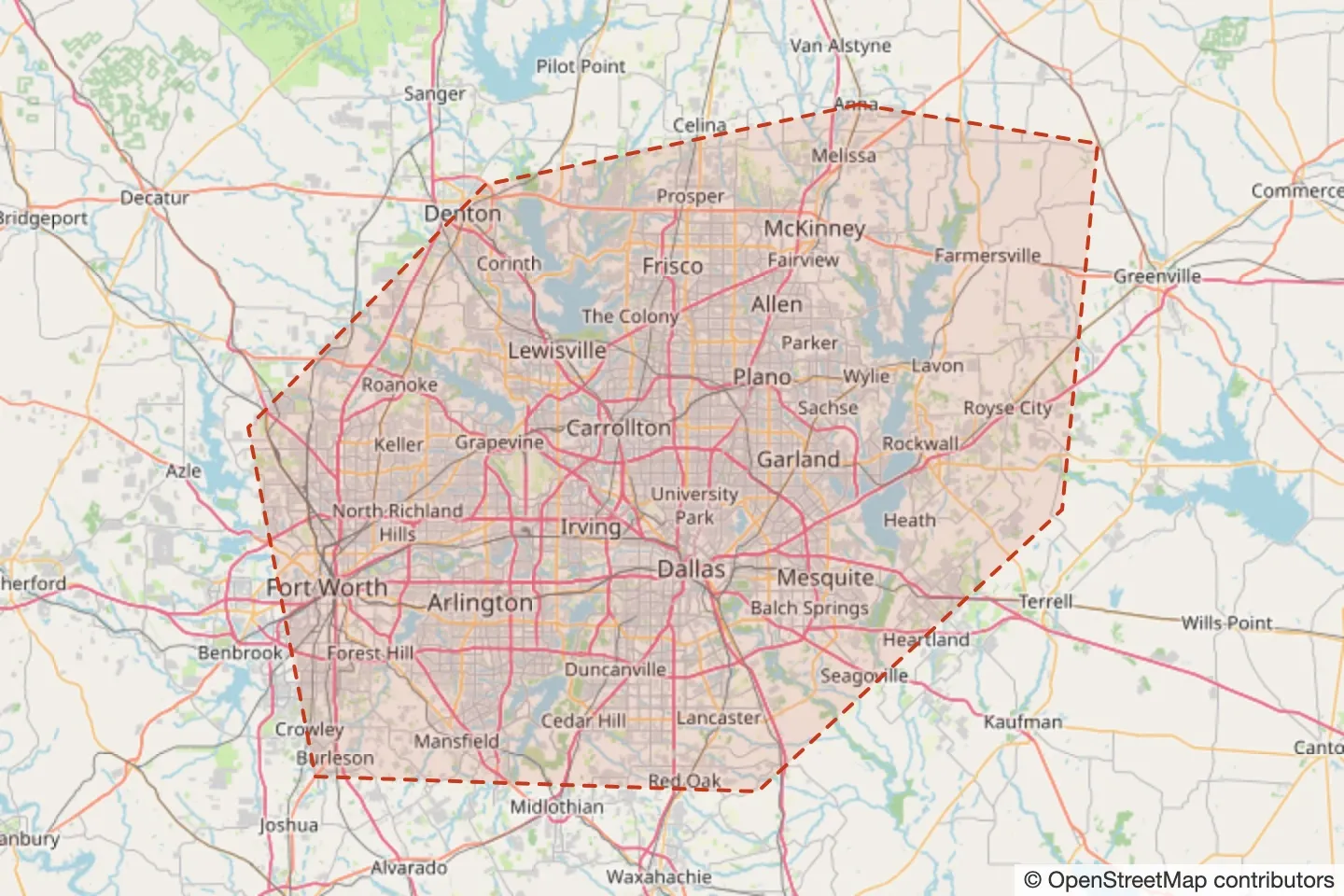
This is the western side of our coverage area. We serve it fully, and we will give you a realistic arrival window on the call rather than an optimistic one. We assess how far the growth actually extends before removing anything, because disturbing dry growth without protection is what puts spores into the air and spreads a contained problem into rooms that were clean.
What Our Mold Removal Service Covers
Removal work covers mold on hard, semi-porous, and porous materials, and the material decides the approach more than the mold does. Salvageable hard surfaces get cleaned and treated in place. Contaminated drywall, insulation, carpet, and ceiling tile generally come out when cleaning would not reliably reach what has grown into the material itself. Where it applies, we HEPA vacuum and detail-clean the affected area, and we check the moisture conditions that let growth start so the same spot has a real chance of staying clean.
Mold Cleanup for Walls, Ceilings, and Trim
Growth on painted drywall, ceiling surfaces, or trim usually traces back to a leak, condensation, or humidity that never fully dropped. Hard, sealed trim can often be cleaned; the drywall or ceiling material behind it depends on how far the moisture actually traveled, which is why we check behind the visible spot rather than assuming it stops where you can see it.
Mold Removal From Wood and Framing
Wood sits in between hard and porous. Surface growth on framing or trim can sometimes be cleaned, dried, and sealed rather than replaced, depending on how deep the growth has gone into the grain and whether the piece is structural. That is an on-site call, not something we assume before looking at it.
Mold on Drywall, Carpet, and Porous Materials
Porous materials absorb moisture into their structure, and growth follows it in — which is why wiping the surface of moldy drywall, carpet, or pad usually leaves what you cannot see behind. Affected drywall is generally cut back to sound material and replaced; carpet and pad in the affected area is usually removed rather than cleaned.
DIY Mold Removal vs. Professional Mold Removal
A small spot on a hard, non-porous surface may be something a homeowner can clean with gloves, a mask, and ventilation. What is not a good DIY project: large or spreading areas, mold that keeps coming back after cleaning, growth after a flood or sewage backup, mold suspected inside a wall cavity or the HVAC system, or a household where someone is asthmatic, allergic, or otherwise health-sensitive. Never mix cleaning chemicals, particularly bleach and ammonia-based products, in an enclosed space. If mold keeps returning to the same spot no matter how many times it gets cleaned, the moisture source was never actually solved — that is a sign to call a professional rather than clean it a third time.
Mold Removal vs. Mold Remediation
Mold removal is focused on the mold you can see and the materials it is growing on. Mold remediation is the broader process around that — moisture source correction, containment, drying, and documentation. Plenty of real jobs need both: the visible growth comes out or gets cleaned, and the reason it grew gets fixed at the same time. See mold remediation for the full process.
When to Call a Mold Removal Company
A few situations are worth a call rather than a DIY attempt: the affected area is more than a small, isolated spot; growth has returned after being cleaned once already; the mold followed a roof, plumbing, appliance, or storm-water problem; the material involved is porous; there is a musty odor but no visible source; or someone in the property has asthma, allergies, chronic lung disease, or a suppressed immune system. Any of those is a reasonable reason to have it looked at rather than guess.
How Professional Mold Removal Works
The process starts with inspecting the visible mold and the moisture conditions around it, then protecting nearby areas and contents before anything is disturbed. Unsalvageable materials come out; salvageable hard surfaces are cleaned and treated. Where it applies, we HEPA vacuum and detail-clean the affected area, dry the materials involved, and recommend whatever moisture correction the situation calls for. Before we close out the job, we will tell you plainly whether what remains needs full remediation, an inspection, or repair work — or whether the removal itself was the whole job.
Common Places We Remove Mold
Mold shows up in predictable places, and each one comes with its own moisture pattern.
Bathroom Mold
Bathrooms generate moisture every time they are used, and a fan that is undersized, not run long enough, or vented somewhere other than straight outside lets that moisture linger on grout, drywall, and ceiling paint.
Basement Mold
Foundation moisture, a slow plumbing leak, or general humidity are the usual causes below grade, and any growth there should be paired with a look at what is letting moisture in.
Attic Mold
Roof leaks and poor attic ventilation are the common local causes, often compounded by AC ductwork sweating condensation in a hot attic. See attic mold removal.
Crawl Space Mold
Ground moisture and limited airflow under a home create conditions that persist longer than they would in a living space. See crawl space mold removal.
Mold After Water Damage
Mold after a leak or a flood usually means the material was not dried thoroughly the first time. See water damage restoration and mold remediation for that combined scope.
Black Mold Removal Concerns
Many dark-colored molds look similar to each other, and appearance alone never confirms a species — that takes a lab, not a visual guess. Suspected dark growth should not be disturbed without protection any more than any other kind, and larger or recurring dark growth is a reasonable case for professional removal rather than a DIY attempt. See black mold removal.
Schedule Mold Removal in Grand Prairie, TX
If visible mold is spreading, coming back after cleaning, or growing on drywall, wood, carpet, or another building material in a Grand Prairie property, have it looked at. We will inspect the affected area, explain plainly what can be cleaned versus what needs to come out, and recommend the safest next step — with a free estimate.
Also Serving Areas Near Grand Prairie
Our Grand Prairie crews also cover Irving, Arlington, Mansfield, Cedar Hill. If your property sits between two of these, call and we will tell you straight whether we can reach you.
Get Mold Removal in Grand Prairie, TX
If you have spotted mold in a Grand Prairie property, leave it alone rather than scrubbing at it and have it assessed first. We will tell you plainly what has to come out, what can be cleaned, and what is keeping it wet — with a free estimate. We also cover Irving, Arlington, Mansfield.