Professional Mold Inspection for Homes and Businesses in Fate
A mold inspection in a Fate property answers a specific question: how far does this actually go, and what is causing it. Mold needs moisture, a food source, and time, and building materials already supply the food — so tracking down the moisture is most of the job. We look at the visible growth, the moisture pattern around it, and the materials involved, and give you a plain explanation of what we found rather than a sales pitch for a job you may not need. Locally, that moisture is often tied to AC ductwork sweating condensation in a hot attic, a bathroom fan vented into the attic instead of straight outside, or a slab foundation on expansive North Texas clay moving enough to open a gap somewhere it should not.
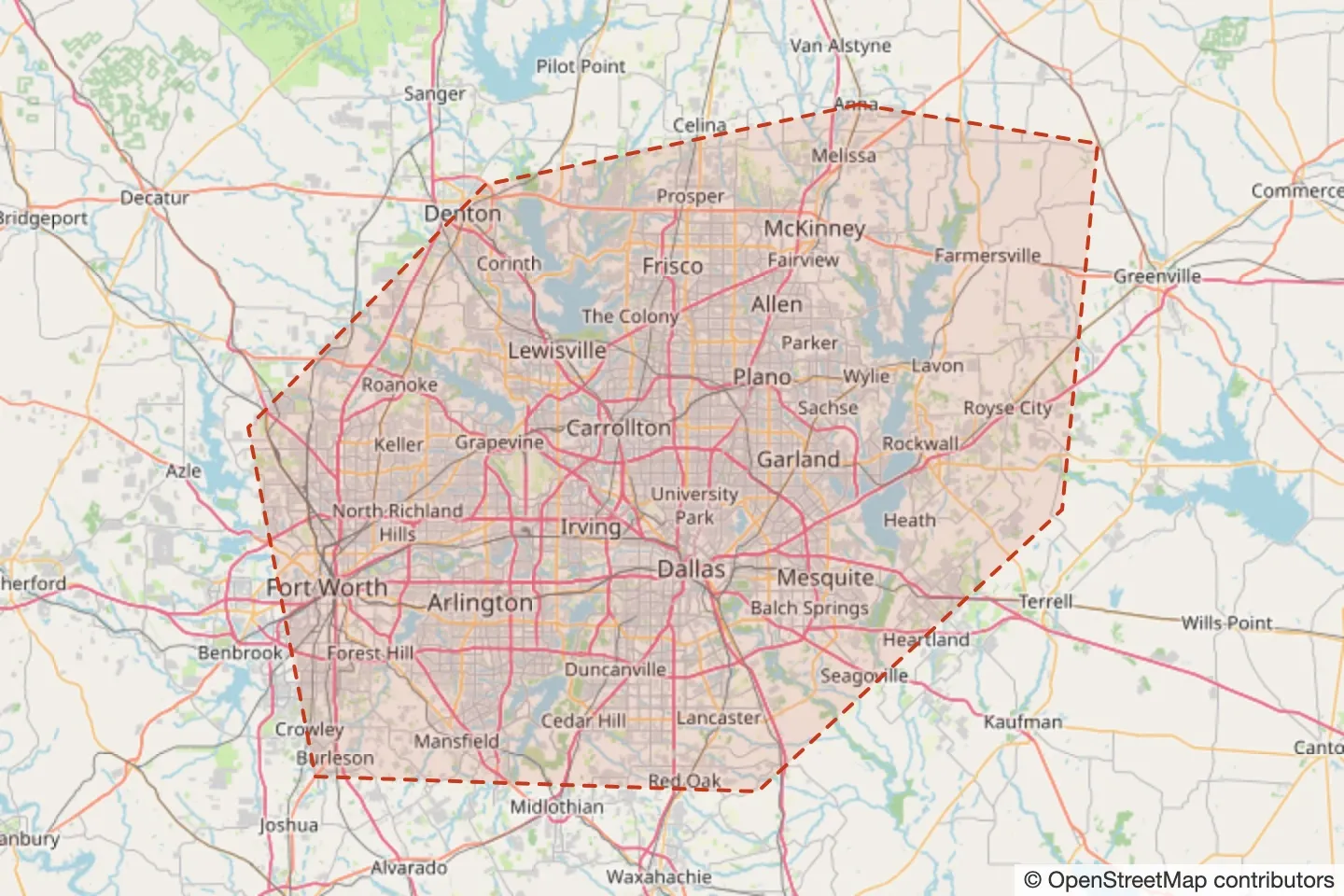
Eastern Collin, Dallas and Rockwall counties sit on a straight run from our McKinney base, so this is an area we reach quickly. The on-site visit is free, and it ends with a written recommendation, not a guess.
When You Should Schedule a Mold Inspection
A musty odor with nothing visible is one of the more common reasons people call — it usually means moisture is present somewhere behind a wall, under flooring, or above a ceiling even without a visible spot yet. Visible spotting, condensation on windows or ductwork, recent water damage, humidity in a basement or crawl space, a roof leak into the attic, or an odor coming from the HVAC system are all reasonable triggers. Buyers, sellers, and real estate agents also request inspections as an independent, documented check before or after closing, and landlords and property managers use them for the same reason between tenants. None of this requires a symptom or a diagnosis — if something looks or smells wrong, that alone is reason enough to have it checked.
An inspection is also worth scheduling any time visible growth looks larger than a small, isolated spot, since the restoration industry generally treats contiguous growth beyond roughly ten square feet as a job that needs professional scoping rather than a quick DIY wipe-down. Waiting rarely helps — a moisture source that has already produced visible growth in one spot typically keeps working on the material around it, so the delay between noticing something and having it looked at is time the moisture problem gets to keep running.
What a Mold Inspection Includes
A mold inspection covers several distinct checks, not just a walk-through of the room where you noticed a problem.
Visual Inspection
We start with the visible growth and the areas around it, since mold often extends further than what is visible from the doorway — behind cabinets, under flooring, or above a ceiling. That wider look is what keeps an inspection from missing a second, unrelated problem in the same property.
Moisture and Humidity Checks
A moisture meter tells us which materials are currently wet, which were recently wet, and which are dry — information you cannot get by looking. Readings taken across several points in a room also show whether a wet spot is isolated or part of a wider pattern worth tracking further.
Affected Material Review
We note which materials are involved, since porous materials like drywall, insulation, and carpet pad behave differently than hard, non-porous surfaces once moisture reaches them. That distinction is what eventually decides whether a material gets cleaned in place or needs to come out.
Source Identification
We work back from the growth to the moisture behind it — locally that is often AC ductwork condensation in a hot attic, a bathroom fan vented into the attic instead of outside, a slow plumbing leak, or a roof penetration. Every mold problem has a moisture source behind it, and finding it is the point of the visit, since a report that only describes the growth without naming the cause does not actually tell you what to fix.
Recommendations and Documentation
You get photographs, moisture readings, and a written recommendation for next steps — removal, remediation, testing, repair, or in some cases nothing at all. That record is also what most customers hand to an insurer or a buyer when the inspection is part of a larger transaction.
Mold Inspection vs. Mold Testing
Inspection is a visual and moisture-based assessment. Testing adds a lab-confirmed sample on top of that — collected by an independent licensed assessor, because in Texas the company that remediates a project cannot also test it, and nobody can tell what is growing by reading a wall. Most of the time inspection is enough: where growth is visible and the source is clear, a lab result mostly confirms what everyone can already see. Testing earns its place when the source is unclear, there is a musty smell with nothing visible, or you need an independent record for a sale, a lease, or a claim. We would rather tell you testing is not necessary than send you off to pay for it, and color alone is never a substitute for a lab result — appearance does not tell anyone what is actually growing. See mold testing for how independent testing works.
What Happens After Mold Is Found
What comes next depends entirely on what the inspection actually turns up. A small patch of visible growth on a hard surface is usually a straightforward job — see mold removal. Growth connected to a wet wall cavity, a recurring problem, or porous material is a bigger scope and points toward mold remediation. Dark-colored growth people describe as black mold gets its own page at black mold removal — color alone never identifies a species, which is what testing is for. If the source traces back to a recent leak or flood, see water damage restoration. And sometimes the answer is that nothing further is needed — a musty smell with dry moisture readings and no visible growth is a legitimate outcome, and we will tell you that plainly rather than manufacture a job.
Schedule a Mold Inspection in Fate, TX
If something in a Fate property looks or smells wrong, an inspection is the fastest way to get an honest answer before spending money in the wrong direction. Call or request an assessment if you see mold, smell a musty odor, or recently had water damage — the on-site visit is free.
Also Serving Areas Near Fate
Our Fate crews also cover Rockwall, Royse City. If your property sits between two of these, call and we will tell you straight whether we can reach you.
Get Mold Inspection in Fate, TX
If a Fate property looks or smells like it might have a mold problem, an inspection gives you an honest answer before you spend money guessing. The visit is free, and we also serve Rockwall, Royse City.