Smoke Damage Restoration for DeSoto Homes and Businesses
Smoke does not stay in the room where a fire started. It rides on heat and air movement up stairwells, through HVAC returns, under doors, and into closets and cabinets the fire itself never touched, settling as residue the moment it cools. A small kitchen fire can leave a film across an entire floor of a house; a garage fire can put soot inside bedroom closets on the far side of the building. If a DeSoto property has smoke damage from a fire, a nearby fire, a fireplace event, an appliance fire, or wildfire smoke intrusion, we can assess how far it actually went — not just how it looks in the room you can see.
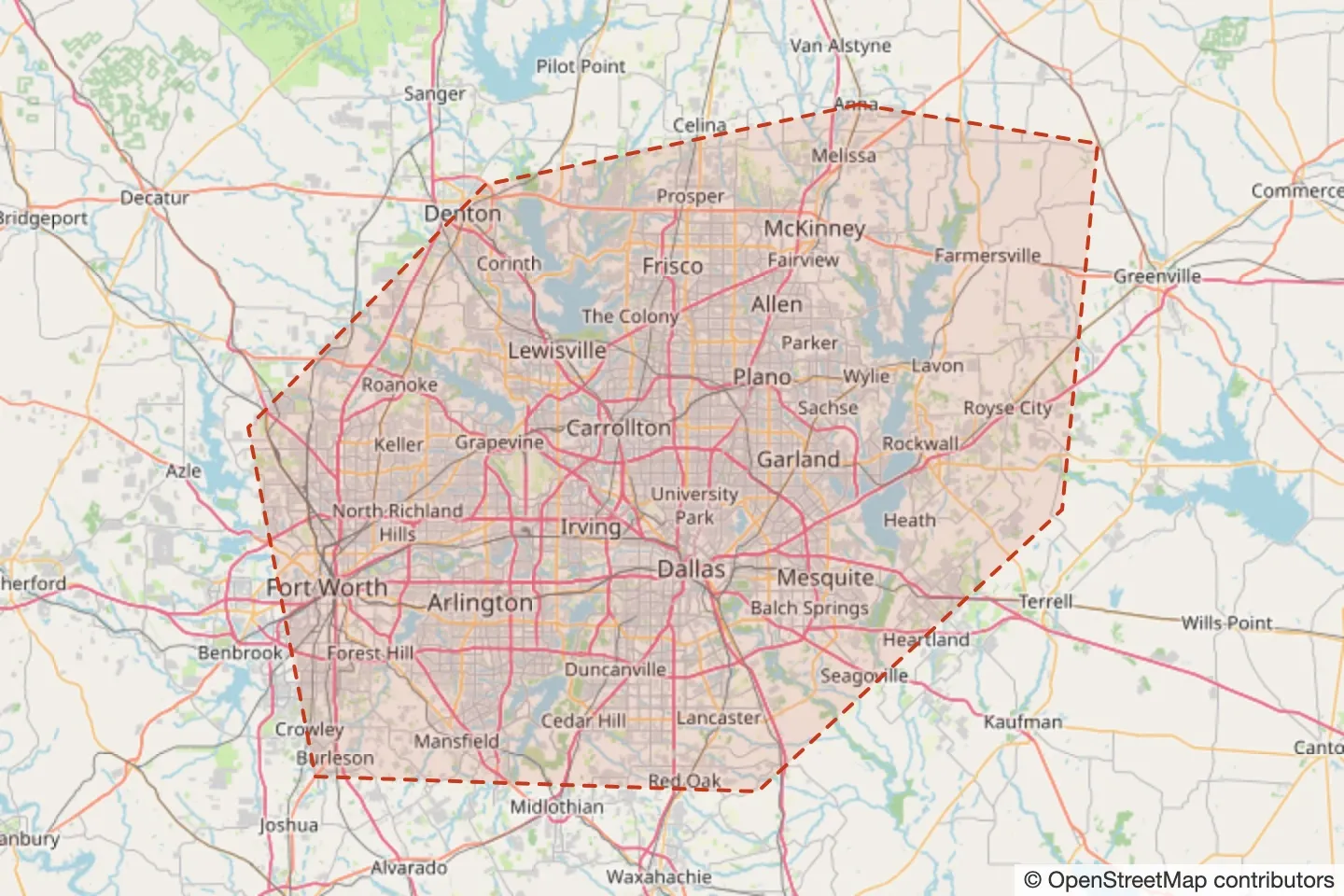
This is the southern edge of our coverage. We work here, and we will be straight with you on the phone about timing rather than promising a window we cannot hold. Most North Texas homes are built slab-on-grade with tightly sealed HVAC systems designed to keep out summer heat, and that same sealed construction traps smoke inside the structure rather than letting it dissipate the way it might in an older, drafty building. That is part of why residue turns up in rooms a fire never got close to, and why the assessment matters more than a quick look at the burn area.
What Smoke Damage Can Affect
Smoke damage is rarely confined to what looks burned. Because residue is airborne before it settles, it reaches materials well outside the immediate fire area, and different materials hold it differently. Smoke moves the way air moves through a DeSoto property — up an open stairwell, along a ceiling until it finds a corner or a vent, under a closed door through the small gap at the threshold, and into any closet, drawer, or cabinet that is not sealed.
In practice that means walls, ceilings, and trim in the fire room and the rooms next to it; cabinets, countertops, and cabinet interiors; flooring, baseboards, and carpet or carpet pad; textiles such as curtains, upholstery, bedding, and clothing; insulation and framing inside wall and ceiling cavities; contents like electronics, artwork, books, and personal items; HVAC returns and ductwork if the system ran during or after the fire; and rooms and closets with no visible fire damage at all.
That last one is the point people miss most often. A room with the door closed during the fire can still carry a fine layer of residue on every horizontal surface, and porous materials in a room that looks untouched can hold odor for weeks if nobody thought to check it. Part of the inspection is going room to room in a DeSoto property, checking ceiling corners and closet interiors, rather than assuming the damage stops at the doorway.
Smoke Residue, Soot, and Staining
Not all smoke residue behaves the same way, and treating it as one substance is how surfaces get ruined during cleanup. Dry soot from a fast-burning wood or paper fire tends to be powdery and brushes or vacuums off more forgivingly. Oily, wet residue from a smoldering fire or from burning plastics and synthetics smears when wiped and can drive itself deeper into a porous surface if the wrong method is used on it. Synthetic materials — carpet, upholstery foam, plastics, cabinet laminates — tend to burn hotter and produce a dense, black, sticky residue that clings to whatever it lands on, while natural materials like wood and paper produce a lighter, drier residue that lifts more easily when handled correctly and quickly.
Protein residue from a kitchen fire is its own category and the one most often underestimated. It comes off cooking fat and food rather than structural material, forms a thin, almost invisible film, and carries a sharp odor out of proportion to how little of it you can actually see. Homeowners sometimes clean the visible char and consider the job done, only to have the smell persist because the film across the rest of the kitchen was never addressed. Because the film is so thin, it is also the easiest residue type to smear rather than lift — a damp cloth or an all-purpose spray cleaner tends to spread it across cabinets and tile rather than pulling it off.
Time works against every one of these residue types the same way. Soot is acidic, and the longer it sits on an unprotected surface, the further it etches into it rather than sitting on top where it can be lifted off. Grout can pick up a permanent stain within days. Chrome and aluminum fixtures — faucets, appliance trim, door hardware — can pit if the residue sitting on them is not addressed quickly. Painted walls and trim can yellow in a way that no longer responds to cleaning. Most of this damage happens inside the first seventy-two hours, which is the real reason we push to get eyes on a DeSoto property fast rather than waiting until a claim is settled.
This is also why we would rather a homeowner not scrub anything before we look at it. Dry-wiping an oily residue grinds it into paint, drywall, and grout rather than lifting it — the fibers of a dry cloth act like an abrasive on residue that is fundamentally an oily film, and the harder someone scrubs, the deeper it goes. Using an all-purpose household cleaner on the wrong surface can turn a cleanable surface into one that has to be replaced, and that cannot be undone by cleaning it differently the second time. Identifying the residue and the surface underneath it comes before any cleaning, not after.
Our Smoke Damage Restoration Process
The work follows a set order because doing it out of sequence causes damage of its own — cleaning a surface before containment is in place spreads residue into rooms that were clean, and deodorizing before the source material is handled just delays the smell coming back. Once cleaning starts, disturbed soot becomes airborne again briefly, and without a barrier between the work area and the rest of a DeSoto property, that airborne residue settles somewhere new.
Inspection and Residue Testing
We walk the property room by room, including areas with no visible damage, and identify the residue type by material and location before deciding on a cleaning method.
Containment
Affected areas are sealed off from unaffected ones so residue is not tracked or carried through the rest of a DeSoto property while work is underway.
Cleaning and Residue Removal
Surfaces are cleaned using the method matched to the residue type and material — a different approach for dry soot, oily residue, and protein film.
Contents Evaluation
Affected contents are sorted at the property into what can reasonably be cleaned and what cannot, so nothing is discarded or kept on a guess.
Odor Source Reduction
Odor is addressed by removing or treating the material holding it, not by masking the smell over material that is still contaminated.
Final Review and Repair Planning
Once cleaning is verified, we document what remains and outline the repair or rebuild work that follows, so nothing is left open-ended. See remodeling and rebuild.
Smoke Odor Removal After Fire Damage
Smoke odor is not something that sits on a surface waiting to be wiped away — it lives inside porous material. Carpet pad, upholstery foam, cabinet interiors, insulation, and clothing all absorb odor-causing compounds into their structure, which is why a room can look fully cleaned and still smell like the fire weeks later. A hard, sealed surface like tile or glass can be wiped clean and the smell genuinely goes with it; a porous one holds onto the compounds the way a sponge holds water, releasing them slowly as temperature and humidity change in the room — which is why smoke odor in a DeSoto property often seems to come and go rather than staying constant.
Running the HVAC system after a fire makes this worse rather than better. Air handlers pull residue-laden air through return vents and push it back out through supply registers, which distributes soot and odor-causing particles through ductwork into rooms the fire and the smoke itself never reached. Once that happens, cleaning the visible rooms does not solve the odor problem, because the source has moved into the duct system. We check whether the system ran during or after the fire as part of the initial walk-through for exactly this reason.
The order matters as much here as it does with residue. Deodorizing before the source material is removed or treated is a temporary fix at best, because the material underneath is still releasing odor. How much treatment a property needs, and whether affected materials can be salvaged or need to come out, depends on how long the smoke sat, what burned, and what the material is — which is why this gets assessed at the property rather than estimated over the phone.
Insurance Documentation for Smoke Damage
We document the rooms smoke reached, the residue type found in each, the cleaning scope, and contents that were evaluated — with photographs taken before anything is cleaned or moved. That record is what your adjuster works from, and a clear one tends to move a claim faster than a verbal description reconstructed after the fact.
What we cannot tell you is what your policy covers or what your carrier will pay. Coverage depends on your policy and the circumstances of the loss, and that determination belongs to your insurer — our part is making sure they have a complete and accurate record from a DeSoto property to work from.
Also Serving Areas Near DeSoto
Our DeSoto crews also cover Cedar Hill, Grand Prairie. If your property sits between two of these, call and we will tell you straight whether we can reach you.
Get Smoke Damage Restoration in DeSoto, TX
If smoke has reached walls, ceilings, cabinets, flooring, textiles, or contents anywhere in a DeSoto property, call before you clean anything yourself. We will inspect what the smoke actually reached, tell you what can be cleaned and what cannot, and give you a cleanup plan before any work starts — not after. We also cover Cedar Hill, Grand Prairie.