Structural Drying Services in Cedar Hill, TX
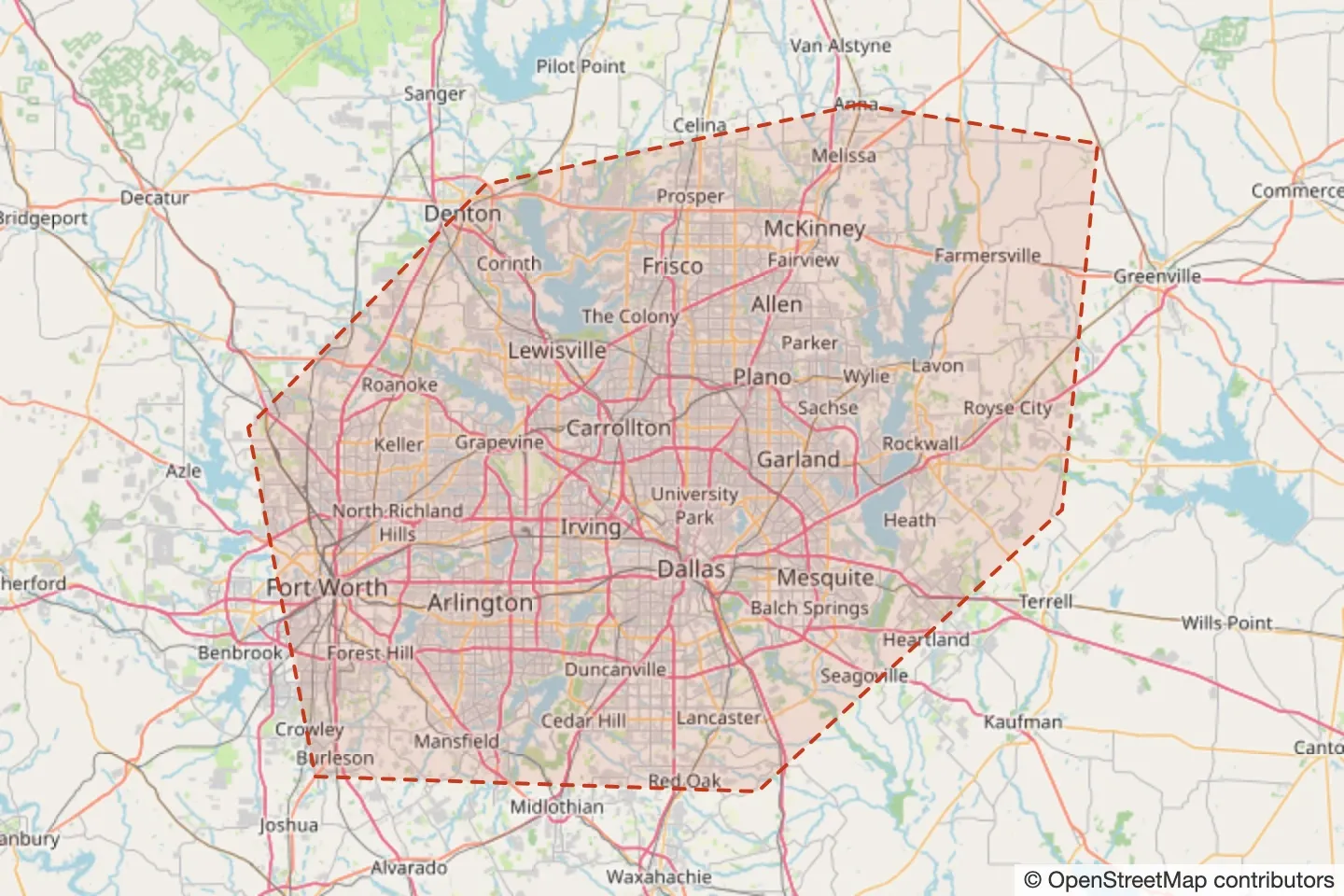
Once the standing water is gone and the air movers are running, a water loss stops looking dramatic — which is exactly why this stage gets skipped or rushed. Structural drying is the process of removing the moisture that soaked into framing, drywall, subfloor, and cabinets before it causes secondary damage: swelling, delamination, or the kind of rot that only shows up months later. This is the southern edge of our coverage. We work here, and we will be straight with you on the phone about timing rather than promising a window we cannot hold. We treat structure drying as measured work, not a fixed number of days with fans running.
Every Cedar Hill property we dry gets the same starting point: an inspection that identifies which materials got wet, how far the water traveled, and what a normal, unaffected reading looks like for comparison. That baseline is what tells us when the job is actually finished, rather than when it looks finished.
What Structural Drying Includes
Structural drying covers every building material that absorbed moisture during a leak or flood — wall cavities, ceiling drywall, subfloor, baseboards, cabinets, and framing lumber. It is different from drying out a wet carpet or mopping up a puddle, because these materials do not release moisture on their own once the surface looks dry. Wet drywall can read dry to the touch on the painted face while the paper backing and the stud behind it stay saturated for days.
Not every material dries the same way or at the same speed. Porous materials — drywall, insulation, carpet pad, particleboard cabinetry — pull moisture into their own structure, so they take longer and can still test wet after a room looks fine. Solid wood framing tolerates getting wet reasonably well and dries slowly but reliably, which is why a stud that reads wet on day one is not automatically a stud that gets replaced. Fiberglass insulation is the exception: once it compresses and mats down from being wet, it does not regain its original loft, so wet insulation is almost always pulled rather than dried in place.
Attics get included too, even though they are less visible than a wall or a cabinet. Hot attic condensation dripping from an air-conditioning duct is a common, non-storm cause of a ceiling stain and wet insulation in North Texas, and it needs the duct sealed or re-insulated as part of the fix — otherwise the same wet spot tends to come back after the affected drywall and insulation are dried or replaced. A bath fan vented into the attic rather than out through the roofline causes a similar slow, low-grade moisture problem in the insulation directly above it.
Wall Cavity, Baseboard, and Cabinet Drying
Water that reaches a wall cavity or the space behind cabinets does not automatically mean cutting the wall open. Small access holes — often drilled behind a baseboard or low on a wall where the patch will be invisible later — let us push dry, filtered air into the cavity or connect a vacuum system that pulls humid air out under negative pressure. That dries all sides of the stud bay, not just the surface anyone can see.
Cabinets get the same treatment on any kitchen or bathroom loss. Water runs into the toe kick and behind the cabinet box where nobody looks until the particleboard swells or a smell shows up weeks later. We check underneath and behind cabinets on every water-related job, and where drying wet drywall or cabinet drying in place is not realistic — heavy swelling, delaminating layers, or contamination — we say so plainly instead of running equipment on material that will not recover.
Air Movers, Dehumidifiers, and Containment
Equipment gets sized to the affected square footage and the materials involved, not set to a fixed ratio of air movers to dehumidifiers. Air movers create controlled airflow across wet surfaces to speed evaporation; dehumidifiers pull that moisture back out of the air so it does not resettle on the nearest cool surface, including a wall or cabinet that was drying just fine on its own. North Texas humidity works against a drying job more than people expect, especially outside of winter, which is part of why conditions get checked rather than assuming standard equipment counts will finish on schedule.
Larger losses, or ones involving contamination, get physical containment — plastic sheeting and negative air pressure that keeps the work zone separate from the rest of the property while drying is underway. That is less common on a straightforward clean-water loss, but it matters on anything where dust, debris, or airborne moisture from demolition could spread into unaffected rooms.
Crawl spaces and slab edges bring a slower, more chronic version of the same problem. The expansive clay soils common across North Texas shift with rainfall and can open small gaps that let ground moisture migrate in over time rather than all at once, so those areas sometimes need a longer equipment runtime and a later recheck than a typical interior room gets.
Moisture Monitoring and Drying Goals
We do not call a room dry because it feels dry to the touch. Moisture monitoring means comparing a reading in the affected material against a baseline taken from unaffected material of the same type elsewhere in the property — same species of wood, same type of drywall, same age of subfloor. When the affected reading matches that baseline, the material is dry; until then, equipment stays in place and readings keep getting taken. For a closer look at how that measurement works across an entire property, see moisture mapping.
This is also where drying timelines get realistic instead of optimistic. A small, quickly-caught leak in one room might reach that baseline in a few days. A structure that sat wet before anyone noticed, or one with a lot of absorbent material involved, takes longer — and no amount of extra equipment shortens that beyond what the material itself will allow.
Readings get logged at each visit rather than only at the start and the end, so there is a record showing the trend — moisture actually dropping over time — instead of a single number that means little on its own. That log is also useful if a question comes up later about whether an area was properly dried before it was closed back up.
When Demolition or Reconstruction Is Required
Structural drying exists to avoid unnecessary demolition, but it is not a substitute for removal when a material genuinely cannot recover. Insulation that has compressed and matted, subfloor that delaminated before drying began, and framing that shows soft or spongy wood get removed rather than dried, because equipment cannot restore material that has already failed structurally. That call is based on what the material is actually doing, not on how long it has been wet.
Where removal is necessary, we document what came out and why before demolition starts, since that record is what most Cedar Hill customers bring to their insurance adjuster and what any contractor doing the rebuild will need to know. The drying and removal decisions happen first; putting the property back together is a separate phase that follows once every reading confirms the space is actually dry.
We would rather tell a customer upfront that a wall cavity does not look promising than run equipment on it for a week when it was never going to recover. That conversation happens as soon as the assessment shows it, not after time and equipment hours have already been spent on material that needed to come out from the start.
Also Serving Areas Near Cedar Hill
Our Cedar Hill crews also cover DeSoto, Grand Prairie, Mansfield. If your property sits between two of these, call and we will tell you straight whether we can reach you.
Get Structural Drying in Cedar Hill, TX
If a Cedar Hill property has wet walls, cabinets, or framing after a leak, we will check what is actually wet against a measured baseline, not a guess, and keep tracking it until the readings confirm the job is done. We also serve DeSoto, Grand Prairie, Mansfield.