Moisture Mapping in Anna, TX for Hidden Water Damage
A wet spot on the surface tells you almost nothing about how far the water actually went. Moisture mapping in an Anna property is how we find out — using meters, and thermal imaging where it helps narrow a search, to identify which materials are wet, trace how moisture has moved through walls, floors, and ceilings, and record readings that prove when a property has actually finished drying rather than just looking dry.
We use it after leaks, floods, appliance failures, and storm water, and during the drying process itself, so decisions about what gets dried, what gets removed, and when equipment comes out are based on numbers, not guesses. It protects against two opposite mistakes at once: tearing out material that was actually fine, and leaving material in place that was wet enough to cause a problem later.
What Moisture Mapping Can Show
Readings taken across a room build a picture of the loss that the eye cannot see. Moisture mapping shows which materials are actually wet versus which only look affected, how far water traveled from the point of entry, whether a cavity behind a wall or under a floor in an Anna home is holding moisture, and whether drying equipment is working the way it should at a given point in the job.
Both mistakes it guards against cost money, and both are avoidable once real readings are in front of us instead of a guess based on how a wall or floor looks.
It also gives a straightforward answer to a question every property owner asks at some point in a loss: is this actually done drying? Without numbers, that question gets answered by feel — does the carpet feel damp, does the drywall look stained — and feel is a poor substitute for a reading taken at the same spot on day one and compared against the same spot on day five.
Meters, Thermal Imaging, and Documentation
Moisture meters take a direct reading from the material itself — drywall, wood, subfloor, baseboard — and give us a number we can compare against a dry baseline taken from unaffected material of the same type elsewhere in the property. A pin meter reads moisture at the exact depth its two small probes reach, useful inside a wall cavity through a small access hole where we need a precise number at a known depth. A pinless meter scans a wider area through the surface without marking it, which is what we use first on finished floors, cabinetry, and anywhere a puncture would matter.
Thermal imaging does not see moisture directly — it sees temperature. Wet material tends to read cooler as it evaporates, so a camera can show a cooler patch behind a wall or under a floor that lines up with where water has traveled, which is useful for narrowing down where to check first. But it is not proof on its own: a cold duct run or a simple air leak reads the same way on camera as a wet cavity does, and hot Anna attics make duct condensation a classic false positive here specifically. Every thermal reading gets confirmed with a moisture meter before it goes in the report.
Every reading gets logged with the date, location, and material, building a written record alongside photographs of the affected area. That record is what shows a drying job actually reached its target instead of stopping because the surface felt dry to the touch.
Using Moisture Maps During Drying
A drying plan without readings is a guess dressed up with fans. Once air movers and dehumidifiers are placed, we return to the same mapped points on a schedule and compare each new reading against the dry baseline. Structural drying equipment stays until those readings say the material has reached the target, not until a fixed number of days has passed or the floor feels dry underfoot.
This is also how we catch a problem early. If a reading in one spot is not moving after a couple of days while everywhere else in the Anna property is drying normally, that usually means airflow needs to be adjusted or there is more water in that cavity than first thought, and we can act on it before it turns into a bigger removal job.
Hidden Moisture in Walls, Cabinets, Floors, and Ceilings
The places moisture hides are predictable once you know where to look. Wall cavities behind baseboards, the toe kick and floor underneath kitchen and bathroom cabinets, subfloor beneath flooring that looks fine from above, and the space above a water-stained ceiling are the spots we check first, because they hold moisture long after the visible surface has dried.
Most Anna homes are slab-on-grade rather than basemented, so water from a leak or flood tends to spread horizontally across a wide floor area instead of pooling in one low spot. That changes how we map a loss — the affected footprint is often larger than what looks wet at first glance, and mapping is what shows the true edge of it.
Baseboards deserve a specific mention because they hide moisture better than almost anything else in a room. Painted wood or MDF baseboard can look completely normal from a few feet away while the wall cavity behind it is still saturated, since the paint film seals the surface and slows how much moisture ever reaches the outside where you could see it. A quick check behind the baseboard, rather than assuming the wall is fine because the paint looks fine, is a standard step on every mapping visit.
Moisture Mapping Versus Leak Detection
These get confused because both involve meters and both happen after water shows up somewhere it should not be. Moisture mapping documents where water has already gone and how much of it there is — it is a restoration and drying tool. Finding the exact point where a pipe is actively leaking, especially one hidden in a slab or wall with no visible sign yet, is a specialized plumbing service, and if that is what an Anna property needs, that is a separate call to a plumber rather than something we take on ourselves.
What we can tell you from a moisture map is whether the affected area is still getting wetter, which is a useful clue that an active source has not been found and stopped yet, even though we are not the ones locating the leak itself. If readings in an Anna property keep climbing visit over visit instead of trending down, that pattern alone is worth raising with a plumber before assuming the drying plan needs adjusting.
Also Serving Areas Near Anna
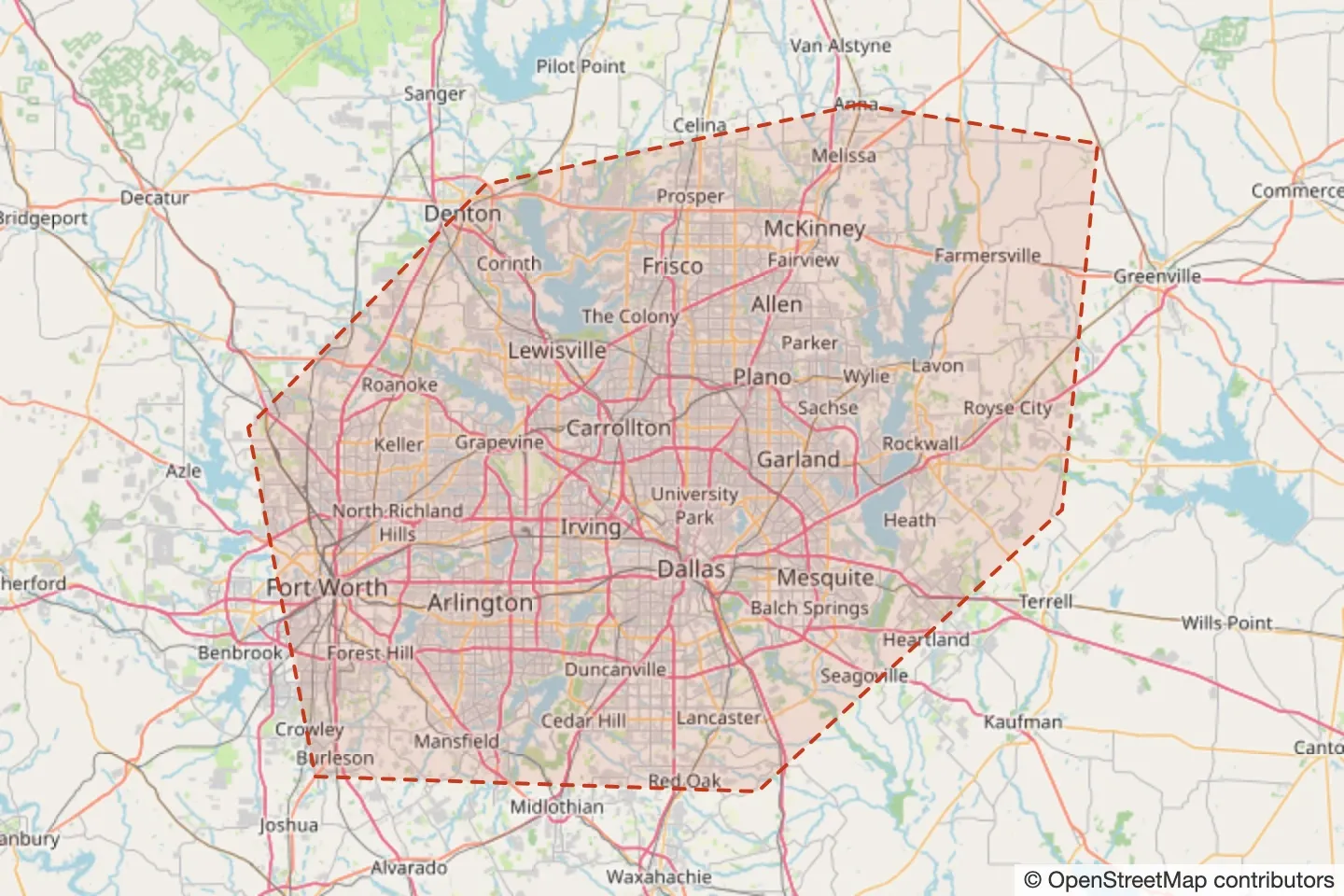
Our Anna crews also cover Melissa, Princeton. If your property sits between two of these, call and we will tell you straight whether we can reach you.
Get Moisture Mapping in Anna, TX
If you are not sure how far water traveled in an Anna property, moisture mapping gives you an answer instead of a guess. We map the affected areas, explain what the readings mean in plain language, and set out what needs drying, what needs removal, and what documentation your insurer will want to see. The on-site visit is free, and we also cover Melissa, Princeton.