Professional Mold Remediation for Homes and Businesses in Addison
When mold is growing inside an Addison home or business, the growth you can see is usually the smaller part of the problem. Mold needs only moisture, a food source, and time, and the framing, drywall, and insulation inside every building already supply the food. Moisture and time are the variables anyone can actually control, and once a material stays wet, growth can begin within roughly 24 to 48 hours — which is why the gap between a leak and a phone call matters more than most people realize.
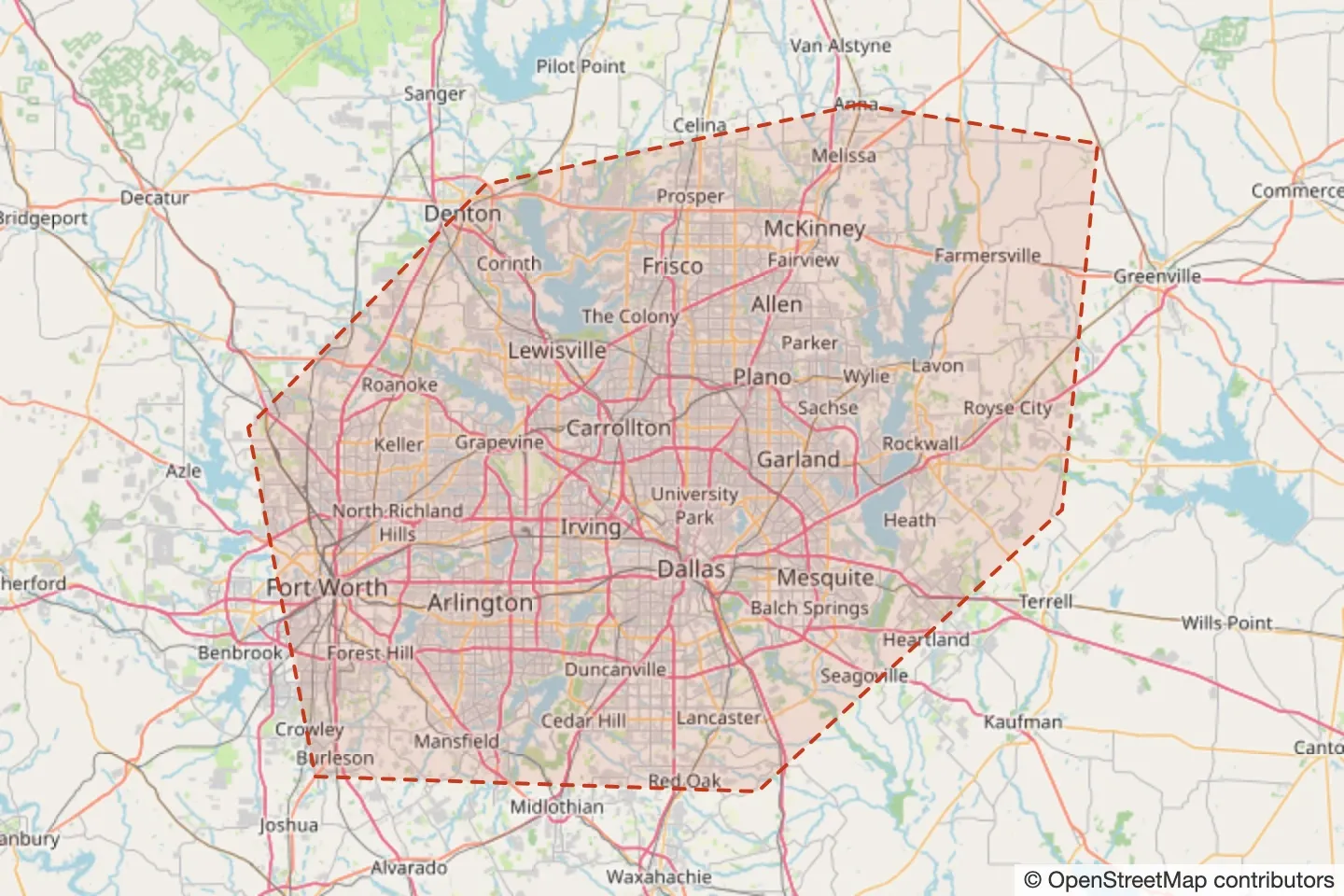
We dispatch from McKinney down through the central corridor. Response depends on the time of day and what we have running, and we will tell you honestly on the phone what to expect. Our approach treats remediation as a complete process rather than a cleaning job: we identify the moisture source, contain the affected area, remove or clean contaminated materials as the situation calls for, dry the structure to a measured target, and document what we found and what we did. Our technicians hold IICRC certifications, and the on-site inspection is free.
What Mold Remediation Includes
Mold remediation is broader than getting rid of what is visible. A remediation project can involve inspecting the visible growth and the moisture pattern around it, sealing off the work area, running HEPA air filtration while contaminated material is disturbed, removing porous material that cannot be reliably cleaned, treating and cleaning the hard surfaces that can be saved, correcting the moisture source, drying the structure, and keeping a written record of the scope. Not every job needs every step — a small, isolated patch does not call for the same containment as growth spread across a wall cavity — but the process exists so nothing gets skipped on a job that does need it.
Mold Remediation vs. Mold Removal
Removal is one piece of remediation, not a separate discipline. Mold removal refers specifically to taking mold off or out of the materials it is growing on. Remediation is the larger process around that: finding the moisture source, containing the work area so growth is not spread into rooms that were clean, drying the structure afterward, and documenting the job. A property with a single small, visible patch on a hard surface might only need removal. A property with growth inside a wall cavity, a recurring problem, or a source tied to a past leak usually needs the full remediation process. See mold removal for the visible-mold side of this work.
When Mold Remediation Is Required
A handful of situations point toward remediation rather than a simple cleanup: growth that covers a large or contiguous area, growth that has come back after being cleaned once already, mold connected to a water damage event, contamination that may involve the HVAC system, porous materials like drywall, insulation, or carpet pad, or a household with someone who is asthmatic, allergic, or otherwise health-sensitive. As a rough industry guideline, contiguous growth beyond about ten square feet is treated as a professional remediation job rather than a DIY cleanup, and that threshold drops further for porous material or a sensitive occupant.
Our Mold Remediation Process
The process follows the same sequence on most jobs, adjusted for scope. We start with an assessment of the visible growth, the surrounding moisture pattern, and any safety considerations for the property. From there we identify the moisture source — because remediation without a corrected source is temporary, no matter how thorough the cleanup. Once the source is understood, we set up containment and, where the scope calls for it, HVAC precautions so the system is not moving spores through the rest of the property.
With containment in place, HEPA air filtration runs inside the work area while material is cut out or cleaned. Unsalvageable porous material comes out; hard, non-porous surfaces are cleaned and treated in place where the substrate underneath is sound. The space is then dried to a measured target rather than left to air out on its own, since residual moisture is exactly what let the problem start in the first place. The job closes with final cleaning, photo and moisture documentation, and coordination on any third-party clearance testing the situation calls for.
Mold After Water Damage, Leaks, or Humidity Problems
Mold shows up where moisture went unresolved, and in Addison that moisture has a handful of common sources. A slab-on-grade foundation sitting on North Texas clay soil can wick moisture upward into baseboards and drywall as the soil expands and contracts through the year. Attics run hot for most of the year here, and AC ductwork running through that heat sweats condensation onto the insulation and framing below it — often for months before a stain shows up on a ceiling. Bathroom exhaust fans vented into the attic instead of straight outside add moisture directly into a space that is already working against itself, and a hard freeze that splits a supply line can leave a wall wet well after the pipe itself is repaired.
Roof leaks, appliance leaks, and storm or flood intrusion follow the same rule: whatever got a material wet has to be corrected, or the same spot grows back no matter how many times it gets cleaned. If water damage is the reason mold appeared, drying and source correction are part of the remediation scope, not an extra step. See water damage restoration and structural drying for the water side of that work.
Safety, Containment, and Indoor Air Protection
Disturbing mold without protection or containment is how a contained problem becomes a property-wide one. Cutting into a moldy wall releases spores into the air, and without containment those spores travel wherever the airflow in the property takes them. That is why the work area is sealed and held at negative pressure with HEPA filtration running inside it before material comes out — everything released during the work gets captured rather than settling in a room that was clean an hour earlier.
Some occupants should stay clear of active work, particularly anyone with asthma, a chronic lung condition, allergies, or a suppressed immune system; that is a decision best made with a physician, not a restoration company. HVAC systems may need to be shut off or evaluated if contamination is suspected, since a running system can move spores through ductwork into rooms far from the original growth. Porous materials — drywall, insulation, carpet and pad, ceiling tile — generally need to come out rather than be treated in place, because growth follows moisture into the material itself. We will not tell an Addison customer their property is "mold free" once the work is finished, because that is not a claim anyone can honestly make. Spores exist in every indoor environment; what remediation does is remove the active growth from affected materials, correct the moisture behind it, and document the work.
Mold Remediation Cost Factors
What a remediation project costs depends on real variables, not a flat rate: the size of the affected area, how accessible it is, whether the material involved is porous or non-porous, whether demolition or contents cleaning is needed, how much drying time the moisture source requires, and whether third-party testing or clearance is part of the plan. Two properties with visually similar mold can land at very different scopes once the wall is opened and the actual extent is known.
Rather than publish a number that will not match your situation, we offer an on-site inspection and a written estimate based on what is actually found. See mold testing if an independent lab-confirmed sample is part of what you need before deciding on scope.
Insurance and Documentation for Mold Damage
Whether a policy covers mold damage depends on the policy language and what caused the loss — sudden, accidental water damage is often treated differently from long-term moisture, humidity, or a maintenance issue that went unaddressed. That determination belongs to your carrier, not to us, and any company that promises coverage in advance is guessing.
What we do control is documentation: photographs of the affected areas, moisture readings, a written scope of what was removed and why, and a record of the mitigation steps taken. Most Addison customers bring that record to their insurer as part of a claim, and a thorough one supports the claim regardless of how the coverage decision lands.
Related Mold Services
Not every mold problem needs the same page. If you already know which situation matches yours, these are the more specific services under this hub.
Mold Removal
For visible mold on a wall, ceiling, or floor that you want assessed and removed, see mold removal.
Mold Inspection
If you are not sure whether what you are looking at needs removal, testing, or nothing at all, start with mold inspection.
Black Mold Removal
Dark-colored growth gets asked about often, and color alone never identifies a species — that takes a lab. For growth people describe as "black mold," see black mold removal.
Attic Mold Removal
Roof leaks and attic ventilation issues create a distinct set of problems above the ceiling line. See attic mold removal.
Crawl Space Mold Removal
Ground moisture and poor ventilation under a home create conditions that differ from an attic or a living space. See crawl space mold removal.
Schedule Mold Remediation in Addison, TX
If you see mold, smell a musty odor, or recently dealt with water damage in an Addison property, have it looked at before more material is affected. We will inspect the area, explain plainly what has to be removed versus what can be cleaned, identify the moisture source, and put a written scope behind it — with a free estimate and no obligation to move forward.
Also Serving Areas Near Addison
Our Addison crews also cover Carrollton, Farmers Branch, Plano. If your property sits between two of these, call and we will tell you straight whether we can reach you.
Get Mold Remediation in Addison, TX
If mold has shown up in an Addison property, the growth itself is rarely the whole story — something kept a material wet long enough for it to take hold. We will find that source, explain the scope honestly, and put a documented remediation plan behind it, with a free inspection and no pressure to proceed. We also serve Carrollton, Farmers Branch, Plano.